Monday, August 31, 2015

A Letter from My Father

My father has been dead 47 years now. Our relationship, as with many fathers and sons, was often contentious, and much of the “blame” I now know, rests with me. I often treated him very badly, though I never doubted for a single moment that he loved me. But when one is young, and away from home for the first time, feeling one’s way through a huge and complex world makes it next to impossible to maintain a proper perspective.

I recently came across a letter my dad had written me two weeks after I entered the Naval Aviation Cadet program in Pensacola, Florida. My mother, bless her, kept every letter I wrote home while I was in service and I, in turn, saved every letter I received from her and my father.
Mom wrote nearly every day; Dad far less often, but that was totally in keeping with the times...writing letters wasn't something that men did.

It's hard to describe my feelings as I read the letter below. Dad always tried so hard to be the kind of father he thought a father should be, which meant doing his best to guide me and guard me against perceived dangers. I truly ache that I never, at the time, really, fully appreciated him or realized just how proud of me he was and how much I meant to him. I would give anything to go back, physically, in time knowing what I know now. Perhaps I would have been a better son. I know I would have tried.

Aug 30 - 1954
                                                                          
Dear Son―

Just read your letter and from your attitude of words I feel I must say this―Don’t forget you are not the only one undergoing the same treatment and you were warned that it wasn’t the easiest thing in the world to go through. Time and time again I have tried to tell you that you must learn to take the easy bumps before you can face the hard ones.  You are getting your first taste of the world as it is and you must learn to face it on your own. I believe in you and sincerely want you to believe in yourself. You are no worse than any of the fellows there and you just have the will to get ahead in order to do so.  Sure, I grant you that it seems dark a lot of times but son you and you alone can make the grade.  Nothing I can do can help you and again I believe you have the stuff in you to be as good as any man there.  So please (not for my sake or your Mother’s) be as good as the next one.   IT’S UP TO YOU.

Enough of this lecturing―it’s really not meant to be that but just a boost to your seemingly sagging morale.  Don’t under any conditions lose that wonderful sense of humor you have.  But again please son think of your future.  I know that you can do it.  So son just a little more effort on your part and I’m sure that there will be no more demerits.

Remember Son it’s no fun punching a time clock and you are receiving the finest training and education that no college in the world can give you.  So Son chin up and try just a little harder. Huh, Son?

I know I’m not the best Father in the world, but none could hope for any more happiness or success than I have for you. This is evidently one of my more serious moods Son, but take it from a guy who knows, nothing that is worthwhile comes easy.  Everything I have someday will be yours but you must earn it. We did and no one can take away the  satisfaction of knowing we did it on our own.  Take all the above Son for what it is worth and whatever the outcome Son, you’re mine now and always.  Whatever comes up we can meet it Son, but again, let’s try a little harder.   Sorry if I bored you but again Son it’s you I am thinking of.  

                          Bye Son
                               Dad   

I had never realized before that in this single letter, he calls me Son 13 times. I am trying not to cry.

Dorien's blogs are posted by 10 a.m. Central time every Monday and Thursday. Please take a moment to visit his website (http://www.doriengrey.com) and, if you enjoy these blogs, you might want to check out Short Circuits: a Life in Blogs (http://bit.ly/m8CSO1), which is also available as an audiobook (http://www.audible.com/pd/ref=sr_1_1?asin=B00DJAJYCS&qid=1372629062&sr=1-1).




Thursday, August 27, 2015

Philosophies

Each of us, as we travel through life, develop our own individual philosophies during the journey, based on an infinitely varied combination of experiences, assumptions/understandings, and our emotional responses to them. They usually develop slowly, often without our giving them much if any conscious thought, until they are a part of us. I have several of the “fortune cookie” variety, though I admit I immodestly find most of my philosophies...rather profound.

Back in the 1950s, my father gave my mother a beautiful grandfather clock, which has been part of my life since Mom's death. It stopped working a few years ago and I just don’t have the money required to get it back into working condition.  I always found its ticking and its chimes comforting, and the sounds became so ingrained into my life—rather like philosophies, now that I think of it—that I assume they are still there. Grandfather clocks work on the interaction of weight and gravity. Three weights suspended from chains are slowly moved down by gravity. Each swing of the pendulum releases a tiny bit of the tension on the weights, which gravity pulls downward until it's time to pull the weights back up to rewind the clock. It is the swinging of the pendulum moving the small gears holding the counterweights which produces the familiar "tick-tock."

This morning, glancing at the now-silent clock I realized that life is very much like a my mother’s clock. We are born fully "wound," like the clock, and each day of our lives is a "tick" of morning and "tock" of evening. And very slowly our lives pass until the weights of our existence have reached the bottom of their chains, and we, like the clock, stop. Unfortunately, unlike the clock, our lives cannot be rewound.

But having so said, I amend it with another of my basic philosophies/beliefs: that of time being a Mobius strip, constantly replaying eternity. Our individual lives, though an incalculably small segment of eternity, therefore keep recurring over and over again, and while that means that we are doing the same things, instant by instant, somewhere, and making the same mistakes and suffering the same pain and sadness—and exhilarating in the same loves and joys—each second is, to us, new and very-first-time. This in no way conflicts with the idea of free will. We do the same thing over and over and each time, and with life-changing crossroad, we are free to choose which one we take; the fact that we choose to take the same one every single time is simply part of the loop.

And that philosophy/belief leads me to yet another, regarding death and what lies beyond. I believe nothing more strongly or with more sincerity that when we die, we simply return to the state that preceded our birth. Death is the end of life. Nothing more, nothing less. There is no awareness, no heaven, and no hell. And how can one be afraid of nothing? The wish for something after death is partly answered by the Mobius strip of eternity; every instant of our lives is being replayed constantly, and has always been replayed and will always be replayed. Therefore the concepts of life and death are in fact moot.

Not all philosophies are, or need to be, profound. Many, perhaps most, are basic, every-day guides to how we live our lives and view and interact with others. They need not even appear to be realistic, but as long as we hold to them and truly believe in them, they are valid. I believe, for instance, in the goodness of our species, despite frequently harsh and overwhelming evidence to the contrary. It is not the reality of our philosophies which matters in the end, it is the comfort they provide us. 

Pondering our individual philosophies and trying to trace their origins can be a fascinating mental exercise...if, in the end, probably pointless. But, like an old fashioned razor strop, it hones the mind.


Dorien's blogs are posted by 10 a.m. Central time every Monday and Thursday. Please take a moment to visit his website (http://www.doriengrey.com) and, if you enjoy these blogs, you might want to check out Short Circuits: a Life in Blogs (http://bit.ly/m8CSO1), which is also available as an audiobook (http://www.audible.com/pd/ref=sr_1_1?asin=B00DJAJYCS&qid=1372629062&sr=1-1).

Monday, August 24, 2015

The Child Within

When I was a child, I spoke as a child, I understood as a child, I thought as a child: but when I became a man, I put away childish things. -- Corinthians 13:11

As with so many things, what is true for most people is not necessarily true for me. I may no longer speak as a child—though I have reverted to the point where my speech is all but unintelligible and getting worse, but I consider retaining the ability to understand and think like a child to be a great blessing. Children are born with priceless gifts: wonder, unquestioned trust, and infinite hope, all of which reality tends to steal away over the years until little—and sometimes nothing—of the gifts remain. They are stolen so gradually that we don't even realize they're gone or, far worse, that we don't miss them or care.

Far from putting away childish things—and I prefer to substitute "childlike" for "childish"—I have clung to them, cherished them, and nourished them. I would not be who I am had I let them fade away or to be stomped out of me by reality. I would most certainly not be a writer.

Whenever I am asked for a biography, I often begin with the same sentence: "When I was five years old, I never wanted to be six." And it is absolutely true. Strange as it may sound/seem, though I chronologically and physically crossed the line between boy and man well over half a century ago, I have never considered myself to be a fully-developed "adult." To me, "adult" is synonymous with "grown-up," and like Peter Pan, I've never wanted to be a grown-up.

Interestingly, as a child, I never had imaginary friends. But today I take a childish delight in having divided myself into Roger, who is the trapped-in-the-physical-world part of me, and Dorien, whose realm is as unlimited as the imagination.

Dorien is my child within. He doesn't have to worry about the mundane. He is totally free to like bunnies. And toast with cinnamon and sugar (which Roger can no longer taste). And lying on his back in the tall grass on a warm, silent summer afternoon staring up at the clouds and seeing the wondrous forms and faces and animals within them. He's been around long enough now that he frequently totally takes over with those few friends who know how deeply a part of me he is. One of those friends just sent a message referencing some article which concluded with the line: "We'll all end up having to worry about rabbits." My instant, without-a-moment's-thought reaction was: "Dorien is always worried about rabbits: do they have enough to eat? Do they have someplace nice to live? Do they wear their mittens when they go outside to play in the winter?" Ageless questions.

Those hardened into the shell of adulthood will undoubtedly find that sort of thinking silly, affected and childish. I prefer to think of it as utterly harmless and fun. It's the way my mind works and has always worked, and the veneer of adulthood has never gotten thick enough to repress it.

But again, as with all things, being child-like has its down side. Children expect more than reality can deliver, as do I, and it is in the slow acceptance of and adjustment to reality that being childlike is lost. My life is built on a child's assumptions that everything is simple, with the result that I do not handle problems, negative challenges, or stress well. While I naturally assume, for example, that I can follow written instructions, this assumption lasts only to the point of attempting to translate the manual's words into action. I still expect it and therefore am condemned to bounce from one frustration to the next. My emotions are too often a child's emotions, and as a result disproportionately given to confusion, frustration, and anger; I seem unable to comprehend even the simplest things “grown-ups” deal with without a second thought.

Because I so naturally assume, I have never found it necessary to accept reality's total dominion, and as a result reality and I have become estranged to a point approaching open hostility. I am truly incapable of understanding why things cannot be as I expect them to be—which is to say, as they should be. Because I expect life to run smoothly, effortlessly, and without conflicts, and expect simplicity in all things, complexities lead to frustration and unhappiness far more frequently than I would imagine is the case with those I would consider fully-developed adults.

And while I feel very sorry for those who have lost their inner child, I am not so far removed from reality as to refuse to acknowledge that in many ways their lives of non-resistance are easier than mine. And I know full well that in the end reality always wins. But with me, it won't be without one hell of a fight.

Dorien's blogs are posted by 10 a.m. Central time every Monday and Thursday. Please take a moment to visit his website (http://www.doriengrey.com) and, if you enjoy these blogs, you might want to check out Short Circuits: a Life in Blogs (http://bit.ly/m8CSO1), which is also available as an audiobook (http://www.audible.com/pd/ref=sr_1_1?asin=B00DJAJYCS&qid=1372629062&sr=1-1).

Thursday, August 20, 2015

The Housewives of....

Ah, I've done it again. I began this blog by heading off in one direction and then wandering off in another. There is a connection, but it might be a little hard to tell at first. See if you can connect the dots. 

Let's start at the beginning:

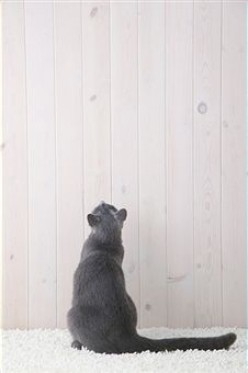
My cat, Spirit, seems to enjoy staring at walls. He does it a lot, and with such concentration I would give anything to know what he sees or thinks he sees there, or what his motivations might be. Usually this is done relatively calmly, as though pondering some weighty philosophical issue. But frequently he will race madly around the apartment and dash to a corner where, screeching to a halt with his face no more than three inches from where two walls meet, he will stare up at God-knows what and "me-owl" at the top of his considerably powerful lungs, then suddenly break off the stare, spin around and dash off into another room at full tilt. 

To say I don't understand cats is rather redundant. But I fear I can say the same of an awful  lot of people as well. I never cease to be amazed at how many of them, too, seem to spend so much time staring...figuratively if not literally...at walls and often making a great do-do about nothing. Well, let's modify that to "nothing that I can even remotely understand." 

I freely admit that I probably watch too much TV. My pattern/routine/rut is such that after spending most of the day writing, I stop at 5:30 for the evening news and then spend between 6:00 and 10:00 wandering across the vast TV landscape trying to find something to catch and hold my interest. I guess in that regard, I might have something in common with Sprit and walls. But I at least try to defend myself by saying I prefer programs which involve at least a smidgen of involvement on my part. And I'll also admit that the "smidgen" occasionally dominates...I'm not above, if the programming landscape is particularly barren, watching an episode of Cops and Hell's Kitchen and HGTV home renovation programs,  on the grounds that they are interestingly informative even though I have not had a bite of solid food in over a month now and I haven’t lifted a hammer in years.

But I convince myself that those programs are profound when compared to the likes of the wildly if inexplicably ubiquitous Housewives of Name-a-City. While I have never watched a single episode of one and would have to be forced at gun point to do so, they are all but inescapable. Both programs seem to delight in glorifying stupefyingly, totally unwarranted vanity, infuriating arrogance and the glories of utter idiocy. At least one of the first of these dumb-fests, Jersey Shore did include some provide some attractive male eye candy--Warning: digression follows!--beauty only goes so far.

(Digression: the men--or, if you're so inclined, the women--on Jersey Shore reminded me of an exchange overheard many years ago in an L.A. bar: "Take a look at that guy! He's incredible!" "Yeah, but I'll bet he doesn't have a brain in his head." "That's okay. I didn't come here to f**k brains!")

But while with Jersey Shore one could turn the sound down and just concentrate on the eye candy, from what I've been able to tell, the only conceivable attraction of The Housewives of Name-a-City is to see what obscene amounts of money can do to people who otherwise have absolutely no reason to exist. As I said, I've only seen the trailers for these shows, but as I race to change the channel, my overwhelming desire is to slap those obnoxious, disgusting, hand-seductively-on-hip poseurs silly and put them a one-way flight to Darfur.

And to yank us all back to the point where this blog began, let me tie a neat bow with the observation that whatever Spirit sees by staring at the walls has to be better than The Housewives of Name-a-City.


Dorien's blogs are posted by 10 a.m. Central time every Monday and Thursday. Please take a moment to visit his website (http://www.doriengrey.com) and, if you enjoy these blogs, you might want to check out Short Circuits: a Life in Blogs (http://bit.ly/m8CSO1), which is also available as an audiobook (http://www.audible.com/pd/ref=sr_1_1?asin=B00DJAJYCS&qid=1372629062&sr=1-1).

Monday, August 17, 2015

"Let's Pretend!"

Cream of Wheat is so good to eat
that we have it every day!
We sing this song, it will make us strong,
and it makes us shout 'Hooray!'

It's good for growing babies
and grown-ups too to eat!
For all the family's breakfast,
You can't beat Cream of Wheat!

And with this ditty, from March 24, 1934 to October 23, 1954 began Let's Pretend, one of the longest-running children's programs on radio. I probably came upon it in the early 1940s. Each program was an adaptation of some classic children's book or fairy tale, and I loved and looked forward to every episode.

I don't think there are programs like Let's Pretend anymore, and I consider that to be a very great loss. 

Are there, in fact, any radio programs aimed at children? Radio was to the imagination what water is to a plant. Children today grow up watching Sesame Street—a wonderful program, but fundamentally different from Let's Pretend on an elemental level: it is totally visual; the child sees everything; there's no need to imagine what Big Bird or Elmo or Cookie Monster look like—-they’re right there. 

But I think the major difference between Sesame Street and radio programs is that Sesame Street's primary focus is on developing learning, whereas Let's Pretend's focus was on developing the imagination, and I would argue that learning without imagination is like a cake without frosting. 

(You can, by the way, hear a few of the original shows by going to http://www.freeotrshows.com/otr/l/Lets_Pretend.html)

Do kids today play the same kinds of games I played? Most of the games did not have specific names but simply sprang from the utterance of the three magic words "Let's pretend like..." and from that point on, the imagination took over completely. A tree became a castle, a pile of dirt a fort, a towel tied around the neck a superhero's cape. 

While age has far removed me from the games I played as a child, it does seem that kids today live in a totally different world, in which the value of developing the imagination is all but totally overlooked. The emphasis is far more on preparing children for adulthood than it is on letting them simply experience the joys of being children. Piano lessons? Violin lessons? Good for developing skills, but terribly short, for most children, on fun. While it can be argued that soccer practice, baseball practice and other sports activities are technically games preparing children for the grown-up world, they are structured activities designed to produce conformity, and the child involved in them is all but totally deprived of the need for any...well, individuality, any mental freedom to explore and engage the imagination.

Do moms today still tell their kids to "Go out and play"? And if they do, do the kids do it, or do they prefer to hunker down with their video games, the vast bulk of which, though set in imaginary landscapes of someone else's creation, seem to emphasize physical dexterity in pressing the button/waggling the stick to kill monsters than in actually thinking what it might be like to be inside the game?

Does the child today, sitting in the Little League dugout, glancing up at whipped-cream clouds lazily floating overhead, have the time to look for castles and whales and sailing ships? Or does he just see clouds as he waits for his turn at bat?


Dorien's blogs are posted by 10 a.m. Central time every Monday and Thursday. Please take a moment to visit his website (http://www.doriengrey.com) and, if you enjoy these blogs, you might want to check out Short Circuits: a Life in Blogs (http://bit.ly/m8CSO1), which is also available as an audiobook (http://www.audible.com/pd/ref=sr_1_1?asin=B00DJAJYCS&qid=1372629062&sr=1-1).

Thursday, August 13, 2015

The Circles of "We"

This started out simply enough, with the idea for a blog talking about why I've always found the word "we" to be my favorite word in the English language, not for its sound but for its definition. (We: pronoun [ first person plural ] 1. used by a speaker to refer to himself or herself and one or more other people considered together). It's the commonality, the "together,"  I love. 

And then, as so often happens when I'm looking up the definition of a word, I found myself thinking of another word which I then have to look up, which leads me to another word, which....Anyway, looking up "we" led me to think of the word "us" and how, to me, "us" and "we" were synonymous. So I looked up the definition of "us" and thereby went from dipping my toe in the water to plunging in far over my head.

The dictionary definition of "us" ( pronoun [ first person plural ]1. used by a speaker to refer to himself or herself and one or more other people as the object of a verb or preposition") for some unknown reason pretty much drains the humanity out of it. The quality of  "together" in the definition of "we" isn't even mentioned in the definition of "us," and for some inexplicable reason that both surprises and bothers me. I still can't help but seeing "we" and "us" as synonymous and overlapping.

But wanting to get on with the original intent of this blog, not knowing which word is really more applicable to its theme, I'll just arbitrarily use "we" because I like it more.

There are concentric circles of "we" in each of our lives, in which our individual selves are the center.  And the minute I typed "our" in that sentence I was compelled to look it up to see how it relates to "we" and "us"!  (our: possessive adjective 1. belonging to or associated with the speaker and one or more other people previously mentioned or easily identified).

I swear, I shouldn't be allowed around a dictionary! 

Dragging myself back to the circles of "we": while all circles appear to be generally the same, there are an infinite number of variations within each one. The individual is always the center of his/her own set of circles. The first circle outward from the center is family and, for most of us (and there we go with "us": see what I mean about overlaps?), the next one beyond that is friends. From that point, the lines between the circles become progressively less distinct the further out from the center one goes, with more overlapping and more variations: acquaintances/co-workers/colleagues, one's religion, social contacts, political affiliations, nationality, ethnic/minority identities. 

Your circles...my circles...are as unique as fingerprints; while all circle categories may be basically the same, there are an infinite number of variations within each. Some circles, like family, religion, and ethnicity, we are born into and, while we may be free to leave some of them, we seldom do. As we pass from childhood to adulthood, we tend to add to our circles, to create new ones, or to join the circles of others.

But what all these circles have in common, and the point of this blog, is that they all—as with so very much of our lives—stem from our individual, personal concept of the word "we"...those things and people which create within us the sense of comfort and belonging.

"We," "us," "our," and "together" form the bases upon which human society is built and wherein lie our hopes for the future.

Dorien's blogs are posted by 10 a.m. Central time every Monday and Thursday. Please take a moment to visit his website (http://www.doriengrey.com) and, if you enjoy these blogs, you might want to check out Short Circuits: a Life in Blogs (http://bit.ly/m8CSO1), which is also available as an audiobook (http://www.audible.com/pd/ref=sr_1_1?asin=B00DJAJYCS&qid=1372629062&sr=1-1).


Monday, August 10, 2015

Loves Park

I can’t remember much about where I lived…other than the 14-foot trailer in which I recovered from a badly broken leg when I was five…until our house in Loves Park, a small suburb of Rockford, Illinois. We lived on Loves Court, a one-block long street off North 2nd Street, the town’s main road. The house was actually a converted garage at the rear of a larger house owned by the Straits, who had three daughters, Pat, Bub, and Sally, then just a toddler. I really was a strange child because I remember deliberately making Sally cry so that I could comfort her and make her stop. (The photo above is of the “gang”—I’m third from the right.)

I can’t actually remember much about the physical layout of the house, other than it had to have been tiny—though huge in comparison with a 14 foot trailer.

I remember the people, though: the Straits and, down at the far end of the block, which abutted the school I first attended, Loves Park Elementary—lived the Wrennas, who were Jehovah’s Witnesses and therefore viewed as some odd type of outsiders. The Wrennas had one son, David, about my age. More on him in a moment. And then, across the street from us, were the Yorks, who had two daughters a couple of years older than I (to my left in the photo), and a son, Sonny (2nd from the left) about a year my junior.

On the street behind us, the one on which the school was located, lived Mr. Bement. He was very nice and, to my child’s eyes, incredibly, incredibly old. He was, in fact, about 90 at the time and had therefore been born before the Civil War (of which I of course knew nothing). 

We were living on Loves Court when WWII broke out, and the entire nation was plunged into uncertainty and fear hard for people today, used to constant war, to understand. I had just turned 8 less than a month before, and was in second grade. Wars were something totally beyond the ken of an 8 year old, though I do remember the outburst of patriotism on all levels. At the school, we held paper drives, and scrap metal drives, and collected cans of used lard and bacon grease somehow needed in the production of weapons to fight the war. I had somewhere acquired a fleece-lined ‘bomber jacket’ and felt very grown up and important.

Ration books, containing stamps to be used to obtain a limited number/amount of food and goods necessary for the war…from gasoline to butter, sugar, and meat…were issued in 1942, but those were grown-up concerns of which I was largely unaware.

I can’t really imagine what life had to be like for the Wrennas, but I knew poor David was harassed terribly at school because, as a Jehovah’s Witness, he could not pledge allegiance to the flag, and every morning, when class started with the pledge, David had to go out into the hall. I felt very sorry for him.

About once a week during the summer, when the weather permitted, some organization or other showed old movies in a nearby vacant lot, projected on a suspended bed sheet. It was the highlight of the week.

It was in another vacant lot, overgrown and with an overturned wooden outhouse, that I had my exposure to the female anatomy. One day, after school, a girl in my class and I wandered over to the lot and somehow got involved in a game of “you show me yours, I’ll show you mine.” I must admit, I was so utterly horrified it seared a revulsion of female genitalia into my psyche. I had already experimented with checking out another male classmate, and it reaffirmed my decision of to whom I would be attracted for the rest of my life. 

I remember we had only one African American (in those days, before today's strictly PC world, they were known as negroes and not yet “blacks” or “African Americans”) in my class. One day his mother, a very heavy-set woman, got angry with him and he ran into his bedroom and hid under the bed. While trying to get to him out from under the bed, she had a heart attack and died. This was, I think, my first real exposure to the concept of death. And thus began my awareness that the world was not always good, and that there were things I could not be protected from.

We moved from Loves Park the next year, but the memories have never left me, after almost three-quarters of a century. The times change, the places change, but I am still me.

Dorien's blogs are posted by 10 a.m. Central time every Monday and Thursday. Please take a moment to visit his website (http://www.doriengrey.com) and, if you enjoy these blogs, you might want to check out Short Circuits: a Life in Blogs (http://bit.ly/m8CSO1), which is also available as an audiobook (http://www.audible.com/pd/ref=sr_1_1?asin=B00DJAJYCS&qid=1372629062&sr=1-1).


Thursday, August 06, 2015

The Forest and the Trees

How strange it is that the human brain has, essentially, no limits, while being held captive by a physical body that does. We live our entire life within those confines. We are, physically, as separate from others of our species as are the individual trees in a forest. We have only our own mind to interpret and make sense of the world around us, and who we are is the compilation of our individual perceptions and experiences. 

It's fascinating how well we somehow manage to interrelate with others given we have nothing but ourselves and our own experiences to go by. As I observe the world around me and the people who pass through my range of vision in the course of an average day, I am frequently struck by what interesting lives they lead and by what I see as the dullness of my own.

Not being able to see the forest for the trees is one of many human phenomena to which we pay very little attention. The closer we are to something, the more narrow our focus, and we basically see only what is directly in front of us. It's all a matter of perspective and as with so many things, perspective requires a stepping back, which is easy enough to do for external things...you can see the forest if you stand back far enough from the individual trees...but it is physically impossible for us to step back from ourselves, and extremely difficult to do so mentally and emotionally.

We look at others' lives with a perspective they cannot have themselves, just as they can look at us in the same way. But even so, by and large we observe only the exterior surfaces...a very truncated (no pun intended) version. I look at others and see what they do and what they have accomplished, and how they relate to other people, and because I only see the surface, as it were, my own life often pales by comparison to theirs. I am not privy to their inner problems, insecurities, worries, fears, or concerns. And because I can't see them, I can't fully understand or appreciate them. 

Since we are within ourselves every nanosecond, 24 hours a day, it's hardly surprising that our own lives can easily appear to be dull or boring. I write books. That's what I do and who I am. Writing is my norm. Since whatever talents/advantages I may have are just a part of me, I see my life as not particularly interesting when compared to the lives of others.

When I do manage to step back from the individual trees that make up the forest of my life, I can see how different each of them is, and how insignificant my own "tree" appears. Few of us allow ourselves credit for our own uniqueness. How many people have flown solo through the tops of huge, whipped-cream clouds? How many people have--or take--the chance to go off to Europe by themselves for a month? How many people have written more than 20 books? I have, but it's just part of me and therefore, to me, nothing special.

Of course, other people have flown solo through clouds, or had wonderful adventures, or written many books...but none in exactly the same combination.

Each person's forest is unique. There is no universal blueprint for a forest any more than there is a universal blueprint for all human beings other than those physical attributes with which most of us are born. Visually, we all pretty much resemble one another, just as visually, trees all resemble each other. But it is our experiences, our emotions, and a million other invisible factors which come together to make each of us uniquely ourselves, our "tree" different than every other tree in the forest.

And my point? That while human nature may dictate that we assume that we are somehow less interesting, less worthy of attention than others, that assumption is wrong and we should celebrate our uniqueness far more than we do. Each of us may be only one tree in the forest, but that tree is far more special than we give it credit for.

I love forests.

Dorien's blogs are posted by 10 a.m. Central time every Monday and Thursday. Please take a moment to visit his website (http://www.doriengrey.com) and, if you enjoy these blogs, you might want to check out Short Circuits: a Life in Blogs (http://bit.ly/m8CSO1), which is also available as an audiobook (http://www.audible.com/pd/ref=sr_1_1?asin=B00DJAJYCS&qid=1372629062&sr=1-1).


Monday, August 03, 2015

Let Me Count the Ways

If you have followed my blogs with any regularity, you have undoubtedly noticed that the majority have a common theme: me; my experiences, my reactions, my responses, my beliefs, my opinions. The answer to any charge of narcissism or egocentrism is simple: who else’s experiences, reactions, responses, beliefs, and opinions might I be qualified to speak of with any authority?

In any case, I was thinking yet again of all the ways I do not fit into this time, this world, this society.

1) I am not a sheep. I do not like things or do things or believe things just because other people like/do/believe them. This made it difficult for me when growing up, when “fitting in” equals acceptance, but it got me accustomed to the fact that I marched to a different drummer and preferred it that way.

2) I am excruciatingly uptight and self conscious in large groups of people having a good time. I do not jump up and down, sway to the music, raise my hands in the air. I do not fist-bump or fist-pump or high five. I do not vocalize my pleasure. I stand there like a pillar of salt, all but unmoving, and in my desire not to stand out from others, I stand out from others. I would love nothing more than to do all those things listed above, but I simply cannot.

3) I do not comprehend the appeal of organized sports, nor do I have or ever have had any particular interest in doing so. (The only possible exception to this is, for some unknown reason, volleyball.) As I have often said, I was 33 years old before I figured out what a “down” was in football, and even then I didn’t care. How people can get so excited over a game they are not themselves participating in is totally beyond my understanding. “We’re Number One! We’re Number One!”…No, YOU’RE not Number One unless you’re on the team…otherwise you’re just an observer. I do, however, admire individual sports—gymnastics, swimming, etc.—and appreciate the talent and effort of the athletes engaged in them.

4) Our national obsession with “celebrities” leaves me shaking my head in disbelief. How the lives and activities…the romantic entanglements, the personal problems…of people I have never met and never will meet can possibly have any bearing on my own life is incomprehensible to me. With all the very real things, the very real problems of the world, how can we waste our time on such trivia?

5) I find national politics to be beyond disgraceful, and the hateful, mean-spirited, vitriolic garbage currently spewed by (mostly) Republican contenders for election to President infuriate and disgust me to the point of despair.

6) I cannot tolerate willful stupidity, the unquestioned acceptance of the most egregiously false premises…or the people who encourage and perpetrate them for their own greedy ends.

7) Organized religion, like organized sports, are largely anathema to me. Throughout history more wars have been fought, more people have died, more intolerance and hatred and misery fostered by organized religion than by any other single factor. And yet every religion, when its credo is boiled down to its essence, shares the same basic message: “Do unto others as you would have done unto you.” Thousands of years, and we still haven’t learned.

8) Unlike the vast majority of people, I am incapable of simply accepting without comment poor service, rudeness, or being ignored by people I am paying to provide me something. Not wanting to “make waves” only perpetrates this type of bad behavior. I insist on speaking to a manager/supervisor to make my displeasure known. It may not do any good, but it certainly makes me feel better. 

I’m fully aware that you, while perhaps reluctant to admit it, share one or more of the issues raised above. It’s part of human nature, I believe, for each of us to feel as though we don’t belong, don’t fit in. But unless someone is willing to openly talk about things few others do, how can we really know we’re not alone?

Dorien's blogs are posted by 10 a.m. Central time every Monday and Thursday. Please take a moment to visit his website (http://www.doriengrey.com) and, if you enjoy these blogs, you might want to check out Short Circuits: a Life in Blogs (http://bit.ly/m8CSO1), which is also available as an audiobook (http://www.audible.com/pd/ref=sr_1_1?asin=B00DJAJYCS&qid=1372629062&sr=1-1).


Thursday, July 30, 2015

Perchance to Dream

I love dreams. The prospect of dreaming is one of the high points of my going to bed.  

Last night I woke up with a topic for a fantastic blog, and had the perfect title: “Whither Luxembourg?” It was to be a lighthearted piece (and, as I recall, actually had me chuckling) speculating on how, if people can’t find the United States on a map, they could ever be expected to find Luxembourg…let alone Andorra…and whether, since no one could find them, if they suddenly disappeared, anyone would notice.

As with all my dreams, it had deeply profound undertones, though I can seldom recall exactly what they were.

The study of dreams is a fascinating one, though it does have the element of removing petals from a rose to find out what makes the rose beautiful. To me, dreaming is vaguely like writing without the use of the fingers―and totally free of the confines of logic. When I write, I tell you stories. When I dream, I tell myself stories.

I’m pretty sure I’ve done a blog on dreams before; I’ve reached the point where after seven or eight years of  blogs there is bound to be some repetition, so I hope you’ll excuse me if I say some of the same things I’ve said before. (Though if I can’t remember them, how can I expect you to?)

At any rate, I am blessed that I cannot remember the last time I had a nightmare, though occasionally a disturbing one will crop up. On a scale of 1-10, the vast majority of my dreams fall into the 7-and-above range. Dreams of flying, in one form are another, are my favorite, but the very best, most euphoric dreams of all are those happy dreams which I swear are reality. Leaping off a cliff and soaring through forested canyons and knowing…knowing…that I really, really am flying is nothing short of euphoric. On thinking of it, however, it occurs to me that I’ve not had any euphoric dreams of late, and I miss them. Well, maybe tonight….

They say that the fact that one tends to dream just before waking up makes it seem as though one has been dreaming longer than actually is the case. But it does seem to me that I spend much of the night dreaming.

Perhaps it is because I am a writer that my dreams are so varied, and so vivid. I dream in dream-logical stories, I usually dream in color, I have dreamt full musicals with original choreography and score and a cast of hundreds, and on occasion I dream…and this is very difficult to explain…in concepts. I have dreamed in weights and in reams of paper and in cardboard boxes instead of word-thoughts. Interesting, but confusing and not really all that much fun.

Though I seldom dream about my parents or those people whose loss I so frequently bewail here in my blogs, when I do dream of them it is wonderful because the wall of knowing they are dead comes completely down. So when Dad walks into the kitchen in a dream, or Mom appears in some setting, doing something, it’s as simple as that. Dad is walking into the kitchen; Mom is wherever she appears, doing whatever it is she is doing. No need for grief or a sense of loss. Everything is fine.

And that for me is what dreams are…assurance that things are fine, and that all I have to do is lie back, relax, and enjoy them. I hope they are the same for you.


Dorien's blogs are posted by 10 a.m. Central time every Monday and Thursday. Please take a moment to visit his website (http://www.doriengrey.com) and, if you enjoy these blogs, you might want to check out Short Circuits: a Life in Blogs (http://bit.ly/m8CSO1), which is also available as an audiobook (http://www.audible.com/pd/ref=sr_1_1?asin=B00DJAJYCS&qid=1372629062&sr=1-1).

Monday, July 27, 2015

Moods

mood, n.: a temporary state of mind or feeling

We all experience moods, some more frequently and/or more intensely than others. They are yet another means of providing an overall balance to life. We often call them “mood swings,” though in most people, they’re like small ripples on a pond, and pass with relatively little notice. But there are times in every life where the difference between mood highs and lows become more intrusive—traumatic experiences which jolt the mind one way or the other—a new love affair, the loss of something very important to us. 

For most of us, mood swings vary from generalized happiness and contentment to generalized dissatisfaction and unhappiness.

But in certain people—manic depressives—these mood swings can be seriously disruptive, taking over and all but controlling the sufferer's life. The high end of the manic depressive’s mood swing is often a state of euphoria most of us rarely experience for more than a very short time, where everything is wonderful and positive. But the lows are bottomless chasms from which there appears to be no hope for escape. There are seldom if ever gentle slopes between them.

Some manic depressives become fairly adept at disguising their condition, giving the outward appearance of normalcy.

Clinical depression differs from manic depression and other lesser “moods” because it is ongoing, with no “upswings” and despite what many people may think, cannot really be considered a “mood.” Those who have never experienced it have no real idea of its impact on a the person suffering from it. I personally have come far too close to experiencing it only once in my life, and for a relatively short time, while recovering from my bout with tongue cancer in 2003. I’d been released from the hospital, the treatments were behind me, and I should have been elated. But I wasn’t. It was though I were plodding 24 hours a day through a dark, swampy forest where the sun never shown. I cried often, and for no good reason; I didn’t want to do anything, go anywhere, see anyone. Finally I contacted my doctor, who prescribed an anti-depressant, advising me that it would probably take a couple of weeks to kick in, which was the case. 

Lately, I’ve just realized, I’ve been undergoing what is probably a mild form of depression. The onset of a number of serious oral problems, the inevitable long-term side effect of radiation therapy, and my concern with how to deal with them has made me generally unhappy and ill at easy. I’ve largely lost my interest in writing—which was a major warning sign.

Moods are something we learn to live with, and they take up very little of our overall lives. It is when they begin taking up an inordinate amount of time that we should try to learn how to deal with them. 

When I was originally diagnosed with tongue cancer, I determined that I would not allow it to be anything other than a disruption and inconvenience, and viewed my treatment as such. While “the power of positive thinking,” is pretty much considered a cliché, I firmly believe it—as should you. It may not be easy, but it is well worth it, and far better than the alternative.

So, while wishing you success in dealing with any mood swing that may be outside your normal range, for myself I simply have to concentrate on looking upon my new set of obstacles and problems as merely inconveniences, and i know I’ll get through this as well.

Dorien's blogs are posted by 10 a.m. Central time every Monday and Thursday. Please take a moment to visit his website (http://www.doriengrey.com) and, if you enjoy these blogs, you might want to check out Short Circuits: a Life in Blogs (http://bit.ly/m8CSO1), which is also available as an audiobook (http://www.audible.com/pd/ref=sr_1_1?asin=B00DJAJYCS&qid=1372629062&sr=1-1).


Thursday, July 23, 2015

Sharing Dreams


There is a trinity of dreams. First are the collective dreams of our race, which guide us toward a better future and urge us to strive to make them come true. That all these dreams have not yet been realized—and may never be—does not deter us from having them. We are an indomitable race, and we are patient.

Second are our individual dreams—our daydreams while awake and those which come with sleep. Our daydreams are generally centered on our wishes for the future and can be whatever we wish them to be. Sleeping dreams are totally beyond our conscious control, and serve a valuable purpose as a form of mental “housekeeping”—a way for us to seek resolution to our inner conflicts within ourselves and accommodation with the waking world around us. We seldom have any recollection of our sleep dreams, and if we can recall them or pieces of them, their meaning is almost always hidden from us.

The third of the trinity of dreams is what prompted this entry: those dreams which are conceived in the mind of individuals—artists, musicians, and writers and translated into words and sounds and images which build bridges between individuals and between the individuals and our collective culture. Born in a single mind, they can go on to encompass us all. John Philip Sousa, for example, is said to have dreamed every note of “The Stars and Stripes Forever” on a ship returning from Europe on Christmas Eve, 1896.

Books are the writer’s dreams set to paper: I know mine are. They are formed, as are all dreams, in the imagination while, for the most part, the writer is awake. And unlike sleep dreams, the writer has some degree of control over them. If unable to direct the dream’s every aspect, at least the writer can consciously influence them by nudging them in certain directions. But for writers like myself, it is the mind which frequently overrides writer's original intentions, and takes the story where it wants it to go. A relatively few writers are able, and prefer, to plot out every single step and detail of a story before actually sitting down to write. It works for J.K. Rowling, who has made more money from putting her dreams of Harry Potter on paper than I will ever see in ten lifetimes. But it would never work for me. The element of spontaneity, both in sleep dreams and writing, is far too crucial for me.

To use flowing water as an analogy, the detailed-plotting method seems to be like one of Los Angeles’ drainage canals—straight as an arrow and contained within concrete walls. I prefer mine to be like a meandering river: I know where it’s going, but while I can see the bends coming up, I have no idea what lies beyond them. And I am always aware that I am not on the journey alone: the reader and I are Huck and Jim on the raft, flowing through the story together. I can’t imagine it being any other way.

People frequently ask writers where they get the ideas for their books. Whenever I'm asked, my answer is always the same: I quite honestly have no idea. They just appear. I’ll be minding my own business, thinking of almost anything except where my next story idea is going to come from, when I’ll be aware of something rising to the surface of my mind like a bubble in a tar pit. I’ll watch while it emerges and forms a bubble of thought and finally bursts, leaving me with a topic or plot idea. I love it!

For me to try to explain how these bubbles form and exactly how I handle them when they do appear is as impossible as explaining how we dream what we dream when we’re asleep.

All dreams are born and are nourished in the nursery of the subconscious, and there they remain until they are ready to emerge, either as a sleep dream or as a book or a painting or a sculpture or a symphony. Dreams are our humanity, and I cherish them, whatever form they take.


Dorien's blogs are posted by 10 a.m. Central time every Monday and Thursday. Please take a moment to visit his website (http://www.doriengrey.com) and, if you enjoy these blogs, you might want to check out Short Circuits: a Life in Blogs (http://bit.ly/m8CSO1), which is also available as an audiobook (http://www.audible.com/pd/ref=sr_1_1?asin=B00DJAJYCS&qid=1372629062&sr=1-1).

Monday, July 20, 2015

The Diamond Lady

Looking back at my 17 years in Los Angeles (1966-1983) brings back a flood of memories of the people I knew there. And I immediately thought of Pat.

Pat was one of my favorite people during my Los Angeles days. I first met her while I was working as an editor for a public relations firm which was contracted to produce a glossy house organ for the statewide (and politically powerful) Engineering and Grading Contractors Association. Pat was the secretary for the association's president. Through my duties, Pat and I were in frequent contact, which developed into a friendship.

Pat was…well, to call her ‘one of a kind’ would not come near to doing her justice. She was one of those wonderful Charo-like souls who, in her passion for life, simply ignored age. She was probably in her 60s when we met. Her hair was almost waist-long and pitch black. She wore about as much makeup as Tammy Fae Baker, but she wore it much better. She favored toreador pants, spiked heels, low-cut blouses (often tube-top) and lots of expensive  jewelry. (She at one time had worked with noted jeweler Harry Winston and conducted  a side business selling jewelry. She referred to herself, on her business card, as “The Diamond Lady.”) Unlike so many outwardly effusive people, her joy for living went to her very core. In many ways, including her voice and certain of her actions, she reminded me of Carol Channing, and I found her just as charming.

I’d see her every time I went to the EGCA offices, but our friendship was cemented during an EGCA conclave in Las Vegas, over several French Cannons...a delightfully refreshing libation consisting of a equal parts champagne and brandy, three of which could easily have rendered me comatose. But Pat could belt them back like water and never bat an eye.

When we first became friends, she was married to a great guy named Chuck Blair, who had been a singer with one of the big bands in the 40s. They lived in a beautiful house in the hills overlooking the entire San Fernando Valley. The memory of looking out from their patio at night, with the valley spread out below like  a carpet of glittering jewels that put the stars to shame, is one of my fondest memories of L.A.

Chuck traveled a lot, so Pat spent a great deal of time on decorating the house to suit her unique taste, including curtains made of strands of crystal which, when the sun hit them, became a million prisms reflecting their light on every surface. She also spent literally hundreds of hours painstakingly gold-leafing every door frame in the house. 

But though I considered Pat and Bob to be the perfect couple, apparently they did not, because Pat filed for divorce and their house was put up for sale. She could not understand why the realtor did not feel that all her expensive gold-leaf and hard work would not be reflected in setting the selling price. The fact that the new owners may have different tastes or even want to repaint the house and door frames was incomprehensible to her.

Her second husband, Bob Mallon, was a very nice guy who adored her, but was not overly fond of gays, though he was always very pleasant whenever Pat would have my partner Ray and I over, or invite us to one of her lavish parties, for which she would spend several days in preparation. Their house, on a hillside just up a winding road from Ventura Blvd., did not have the view her old house did, but there was a large if steeply inclined back yard set into a hillside, on which she and Bob spent a fortune landscaping and decorating with colored lights.

After I moved from Los Angeles, we more or less lost touch, though every year I would get the same mass-printed postcard saying “Keep in touch!” and signed “The Diamond Lady.”

Several years ago now, I received a note from someone who had read my book "Short Circuits a Life in Blogs," which included an earlier blog I'd written on Pat, informing me that Pat had died in 2004, and even though I knew she almost certainly could not still be alive--she probably would be pushing 100 now--I was truly saddened to hear it. But I have developed the ability, over the years, to ignore reality. So to me Pat is still alive, bubbly as ever, sparkling like the crystal “curtains” in her windows, still throwing her parties and being her effervescent self. In some ways, Pat was for me a symbol of all my L.A. days, and every now and then―today especially--I truly miss them…and her.

Dorien's blogs are posted by 10 a.m. Central time every Monday, Wednesday, and Friday. Please take a moment to visit his website (http://www.doriengrey.com) and, if you enjoy these blogs, you might want to check out Short Circuits: a Life in Blogs (http://bit.ly/m8CSO1).


Thursday, July 16, 2015

Remembering

I'm not sure why I insist on sharing these things with you...I can't expect you to have any interest in someone you never knew. Yet it is precisely because you never knew Bob Combs, my friend of more than 40 years, that I'd introduce you—however peripherally—to him here. Bob worked very hard at being a curmudgeon, scoffing at and disdainful of everything. He frequently drove me to distraction, as good friends are wont to do. And yet under that carefully-constructed outer shell beat the heart of a romantic.

During the last years of his long battle with laryngeal cancer, he wrote a column for his local newspaper. Quite by accident I came across it not ten minutes ago, and in keeping with my long-held belief that one is not truly dead until one is forgotten, I wanted to bring Bob back for a brief moment. He is not forgotten by those who knew him, and perhaps by reading his words, he may come alive for you.

Following his death, I received the following note from one of his friends. Here it is.

05-21-07

Dear Friends,

With his customary impeccable timing Bob Combs passed away on May 19th 2007, his 92nd birthday. He valued his friendship and kinship with each and every one of you. In accordance with his wishes, there will be no services of remembrance, except the ones you may choose to hold in your hearts.

Attached is Bob's final Sunny Side.

The time has come to say farewell – while it’s still possible!

It’s been such fun these past 13 or 14 years, since Lon got me started on this every-Friday essay, or column, or whatever-you may call it, in an attempt to balance out the Letters page – that is, to point out all the wonderful, beautiful, happy-making things around us. “On the Sunny Side of the Street!”

Stevenson wrote: “The world is full of such a number of things, I’m sure we should all be as happy as kings!”  Well, as Kipling wrote, “The captains and the kings depart,” but we are still here – until our time runs out. There will always be spring flowers out by Shell Creek,  and the beautiful, winding, climbing,roads of our county, and Black Mountain out past Pozo, lifting its lordly beauty, with its calm and its silence.

There will always be an annual crop of children, full of curiosity and joy – sharing all their exciting discoveries with us, as we once shared with our grandparents. What delights they are, and we must strive to see that the world they grow up will be even better that the one our parents built for us.

In due season will come the breezes and the winds; the black clouds or the fleecy clouds of purest white. The trees and bushes will bud and leaf out and blossom, and flowers will pop out of the ground, seemingly overnight. The birds will come back and my favorite mockingbird, Moxie, will sing his heart out under the moons of spring and there’ll be Moxie XVIII before we can blink!

In its season will come the rain, but nothing, in our part of the world, will rule us as will the sun – and its “Cooker Days.” And so the grapes ripen, “to make glad the hearts of man..” And this old earth turns and turns, and our solar system does, too, and our galaxy goes spinning through space – a tiny dot in the vastness of the unknown.

So, let’s do the best we can, while we can, and smile oftener than we groan, and chuckle more than we sigh, and look on the sunny side….and so, goodbye.

*****

Dorien's blogs are posted by 10 a.m. Central time every Monday and Thursday. Please take a moment to visit his website (http://www.doriengrey.com) and, if you enjoy these blogs, you might want to check out Short Circuits: a Life in Blogs (http://bit.ly/m8CSO1), which is also available as an audiobook (http://www.audible.com/pd/ref=sr_1_1?asin=B00DJAJYCS&qid=1372629062&sr=1-1).

Monday, July 13, 2015

Flashbacks

For some unknown reason, I awoke this morning having flashbacks of my days (23 years, actually) in Pence, Wisconsin. I moved to Pence from Los Angeles in January of 1983, driving myself in a 24 foot U-Haul towing a second 12-foot trailer behind it. The temperature the day of my arrival was -19. After a hard-now-to-believe 23 years, I left Pence in 2006 to return to Chicago after 40 years, and never looked back.

Geographically, Pence was idyllic. Just seventeen miles south of the magnificent Lake Superior, and surrounded by thousands of acres of forest, the setting is ideal for any nature lover. Endless trails wandered through soundless woods filled with patches of wild blackberries, raspberries, and blueberries. Autumns in years with just the right mixture of rain and temperatures turned the forests into sensory overloads of color which defy description. Winters bring temperatures of -24 and colder; annual snowfalls exceeding 300 inches are common.

Once a thriving lumber and iron-and-copper mining area, the mines had all closed twenty years before my arrival, and commercial logging had been reduced to a few small-time operations. The entire area sank into an economic depression from which it has never recovered. No rail service, and only very limited bus service further isolated the area. Employment opportunities were almost nonexistent. Several local ski hills and the making of Christmas wreaths provided some seasonal employment, but that—and whatever employment could be found in local shops—left many chronically unemployed.

So very many jumbled memories of people and events flood my mind as I try to make some semblance of them without getting into overly long detail on any one of them. The bed-and-breakfast I had moved there to open proved to be a situation I would never, ever repeat despite a number of wonderful guests-who-became-friends. Because the B&B never provided enough money to live on, I had to rely on other work—managing a local food co-op, working part time at a local supermarket, then as a paralegal for a law firm. I did begin writing books, though I felt I needed a pseudonym as a buffer against the intolerance of local rednecks.

Personal relationships? One of the reasons I left L.A. was in hopes of saving my then partner and love of my life Ray from alcoholism (of course a totally futile effort). While he did try, he could not go three months without drinking, which resulted in his being arrested more than once. Finally, given the choice by a judge to either go to jail or leave the area, he chose the latter and returned to Los Angles and was dead of AIDS within a year. I had a subsequent disastrous five-year relationship with someone I really did not like but could not get out of. And finally, my taking in, at a friend’s request, of a lost soul from whom I contracted the HPV virus which resulted in my bout with tongue cancer.

Friends? I was lucky to have some good friends. Two doors west of me lived the Reinerio sisters, Louisa, 80, Rose, 82, and Amelia, 89, who were very kind to me—all three sadly died while I was still living there, Amelia first, then Rose, then finally Louisa; Esther and Albert Baker, Jody DeCarlo, and Tony Barnes, one of the very few gays in the area, and of course Ursula Schramm, a holocaust survivor. I have fond memories of all of them, and each one could be—as Ursula already has been—the subject of a full blog. 

It’s odd how completely I have been able to close the door on those 23 years of my life…it’s rather like they were washed away in a flood, leaving only scattered, fragmented memories of my life there. To this day, I still rather miss my days in Los Angeles. I have many solid, pleasant memories of my time there. Why is the same not true of Pence, I wonder?

Your life, like mine, is made up of an infinite number of pieces, large and small…of places and people and experiences and memories. As I am the sum of all of “my” pieces, so are you the sum of yours. They cannot be changed, only remembered, reflected upon, and perhaps learned from.


Dorien's blogs are posted by 10 a.m. Central time every Monday and Thursday. Please take a moment to visit his website (http://www.doriengrey.com) and, if you enjoy these blogs, you might want to check out Short Circuits: a Life in Blogs (http://bit.ly/m8CSO1), which is also available as an audiobook (http://www.audible.com/pd/ref=sr_1_1?asin=B00DJAJYCS&qid=1372629062&sr=1-1).

Thursday, July 09, 2015

Dear Lord, but You're Dumb!

Disclaimer: The title of this blog is not the personal opinion of the writer, but apparently that of just about everyone out to get something from you. Please read on.

I never cease to be amazed by the extent to which those trying to sell something, be it a product or an idea, will go in their blatant assumption of your stupidity. This phenomenon is personified in a cartoon I once saw, in which a bunch of ad executives are seated at a table surrounded by graphs and charts and blown-up ads, and one is saying, "Ok, let's get down on all fours and look at it from the customer's point of view." Paraphrasing my favorite quote from H.L. Mencken, "no one ever went broke underestimating the intelligence of the American consumer." 

You've seen the ads for drugs to treat atrial fibrillation and atherosclerosis in which they go to great pains to introduce them as "Atrial fibrillation, or 'Afib'", and "Atherosclerosis, or 'Athro.'" They apparently are reluctant to just use the full and correct name for the conditions throughout the commercial because they are obviously convinced you are too stupid to handle the complexities of polysyllabics. I suppose we should be grateful that the one time in the commercial they do use the proper name of the condition they do not pause to stare intently into the camera and carefully mouth each syllable as they pronounce it (“A…tree…al...fib...ril...la...shun" and “Ath...er...oh...sklor...oh...sis").

There are two main types of assumption of stupidity. The first—the most common and most reprehensible—is the contemptuous attitude taken by spammers, religious zealots, and self-appointed pundits, who don’t bother to even pretend that you have any degree of intelligence whatsoever. In fact, intelligence and independent thinking are utterly anathema to them. (If you do believe them without question, a good case may be made for charging you with at least complicit stupidity.)

The second and equally bothersome but somewhat understandable assumption of stupidity is that routinely employed by corporations fearing lawsuits. I call this "covering our asses stupidity." In all fairness, companies and corporations have little choice but to emphasize the lowest common denominator. Directions on bottles of bleach saying "Do Not Drink" are, sadly, necessary in our increasingly litigious society to prevent costly lawsuits by those—or their survivors—who would otherwise sue claiming "but it didn't say not to drink it!" As a result, almost every prescription and even over-the-counter medication today comes with literally pages of cautions about possible side effects, even if realistically the chance of those side effects may be one in ten million or more. In television commercials relating the list of side effects is often as long as the commercial itself.

Corporations are, however, not above displaying mild contempt for your intelligence by assuming you will simply accept without question their claims that whatever they are offering at the moment is superior to every other similar product out there on the market. I must admit to being pleased by the apparent waning of the old favorite sales pitch, "New! Improved!" showing up on products every six weeks. I hope it is because the advertisers finally realized that spending millions of dollars to convince you Burp-O is the greatest thing since sliced bread, and then turning around six weeks later with a "New! Improved!" ad campaign implying that what they've been selling you wasn't really all that good might not be the best idea.

TV abounds in assumptions of stupidity. Every single time you fall for a "A $999 value for only $19.99," a "Not sold in Stores," or a "But wait! There's more!" scam, you're proving their point. (They do not want anyone to stop to think that if the product were worth the powder to blow it to hell they wouldn't need to offer you six of them "for the price of one” to get you to buy it.)

Every spam folder is heavily sprinkled with notices by glorified ambulance chasers looking to make money by convincing you to sign up for some egregious class action suit ("Have you suffered a paper cut while reading Time magazine? You may be entitled to millions in compensation!"). Of course, before you get your share of the booty, the lawyers will have taken the bulk of the total settlement for their herculean efforts on your behalf. 

But don't you worry your pretty little head about any of the above. I need your financial backing for the guaranteed best-seller I'm ghost-writing for Ted Cruz and Mike Huckabee: “The Truth About Barack Obama, Spawn of Satan!” 


Dorien's blogs are posted by 10 a.m. Central time every Monday and Thursday. Please take a moment to visit his website (http://www.doriengrey.com) and, if you enjoy these blogs, you might want to check out Short Circuits: a Life in Blogs (http://bit.ly/m8CSO1), which is also available as an audiobook (http://www.audible.com/pd/ref=sr_1_1?asin=B00DJAJYCS&qid=1372629062&sr=1-1)