Monday, October 21, 2013

Hype


Have you noticed how ours is increasingly a culture of superlatives? Nothing is simply "good" anymore--it's marvelous"/"amazing"/"stupendous"/"incredible." And even in punctuation, the old standby sentence-ending "period" is going the way of the dinosaur, being replaced by the exclamation point, often in multiples. TV pitchmen no longer speak, they shout, apparently in the hopes that you won't realize that they are saying absolutely nothing. And speaking as rapidly as possible in a frenzied "Run! Save yourself!" tone is designed to create immediate reaction, not thought.

Movie trailers, especially for action films, take the opposite tack: narrators are chosen for their ability to convey ultimate masculinity and authority and each word is uttered as though it were coming from a burning bush.

They somehow feel that screaming at a machine-gun pace will sweep you up in the excitement and make you overlook the fact that they are in fact saying very little of substance. Billy Mays, the recently deceased TV pitchman, drove me absolutely to distraction. I found him unbearably annoying. Yet he became a multi-millionaire, which says something of the influence my opinions have upon the general public.

The trouble with superlatives...well, one of the many troubles with them...is that like a medicine devised to counter the strains of a virus, the virus mutates in response to the medicine to the point where what was once good enough to do the job is no longer effective. So a stronger medication is used, which in turn loses its effectiveness, necessitating a still stronger....well, you get the picture. Words to describe the condition of being adequate or pleasant or good lose their potency, to be replaced with stronger adjectives. The intensity of the delivery of the message is also ramped up.

For many years, any minor change made in a product was touted as "New & Improved" no matter if it was merely a change in the typeface used on the box the product came in. "New & Improved" covered a multitude of purposes, often masking the fact that the "New & Improved" product was now in fact smaller and more expensive than the old one. It always amused me, even as a kid, that as soon as the New & Improved version came out, the advertisers implied that the older version was worthless, even though they'd spent years touting how wonderful it was.

A hamburger is no longer a hamburger. It is a Super-Deluxe Scrum-Diddyiscious Monstro Burger Supreme, "piled high" (sandwiches are now always "piled high" with the freshest possible delectable ingredients hand chosen by gourmet chefs). Lordy, even cat food is described in terms one would expect to find on the menu of a five-star restaurant.

When is the last time you saw an ad for a good movie? No, movies are always the most spectacular extravaganzas ever put on film. You know this because, even though the film or TV show hasn't even aired yet, you are assured that "everyone" is talking about it. Well, excuse me, but I'm part of "everyone", and I'm not talking about it, and I don't know of anyone who is.

Promotion is fine, but there's got to be a line drawn somewhere. Can't we go back to calling a spade a spade rather than a Spectaculo X-980 Super-Colossal Jumbo Earthmover?

Sigh.


Dorien's blogs are posted by 10 a.m. Central time every Monday and Thursday. Please take a moment to visit his website (http://www.doriengrey.com) and, if you enjoy these blogs, you might want to check out Short Circuits: a Life in Blogs (http://bit.ly/m8CSO1), which is also available as an audiobook (http://www.audible.com/pd/ref=sr_1_1?asin=B00DJAJYCS&qid=1372629062&sr=1-1).

Thursday, October 17, 2013

Validation

One of the most basic but unrecognized of all human needs is the need for validation--the reassurance from others that we not only exist but have value as human beings. We never outgrow our need for consideration, for courtesy, for friendship, for praise, all of which show us that we are not, as we far too often believe, alone.

A tv program I saw many years ago, in which an experiment was conducted on young monkeys saddens and sickens me to this day. In the experiment, very young monkeys were taken from their mothers and confined in a cage with a wire contraption shaped like an adult monkey. To watch the babies try to cuddle, to get some attention from the artificial monkey was devastating. And when later, a cloth monkey was put into the baby's cage, I actually cried to see its reaction. Yet still, no matter how hard the baby tried, it got no response. That they had to endure this for “the sake of science” is unconscionable. Needless to say, those babies were emotionally crippled for life. The same, it is sad to say, is true of humans. Babies not held, not cradled, not physically touched or talked to lead lonely, dysfunctional lives.

But to one degree or another, even those of us who have not been deprived of normal human interaction still require validation from others. Some of us (myself included, I readily admit) need more than others. The lower the individual's opinion of his/her self-worth, the more important validation from others becomes. 

Children are notoriously needy of praise and reassurance. They're trying to find their way in a strange world, constantly confused and frightened, being bombarded by things they do not understand. It is validation from friends and family which makes the journey through life infinitely easier.

This need does not disappear by reaching adulthood, as I...and I suspect you...can attest. As a writer, nothing pleases me more than to hear from a reader who likes what I have written. I become little-boy delighted to think that I have received their validation, and that I may not be quite as bad as I far too often think of myself as being. I tend to react very much like Sally Field did when she said, during her Oscar acceptance speech, "You like me! You really like me!"

Effusive praise and fawning are self-serving, patently false, and off-putting. But like so many things in life, small, spontaneous gestures are beyond measurable value. Think back to the last time you received an unexpected form of validation, and how it made you feel. A smile, a casual compliment, even a simple (but sincere) question costs the giver nothing, but can mean the world to the recipient. Thoughtful words and gestures are the coals which, in the words of the old saying, "warm the cockles of the heart." 

Why we so frequently overlook the value of validation to others--even when we're aware of how it makes us feel--is a puzzle. Part of the reason is that we tend to take our friendships or admiration for someone for granted. "Oh, he/she knows how I feel." Well, no, he/she may not know, and even they do, it's nice to hear. Any acknowledgement that you value another person can do wonders and on occasion can be lifesaving. 

I began this blog on a heavy note and will end it with another, not to depress you, but to provoke thought. I've told the story before of the young man in San Francisco who determined to commit suicide by jumping from the Golden Gate bridge. He left a note in his apartment describing his feelings of loneliness and lack of worth. He was undecided about going through with the suicide even as he wrote the note, saying "I am now going to walk to the bridge. If even one person smiles at me or acknowledges my existence, I'll come back home."

He did not come home. 

The answer to the biblical question “Am I my brother’s keeper?” is, to a greater degree than we realize, “Yes.”


Dorien's blogs are posted by 10 a.m. Central time every Monday and Thursday. Please take a moment to visit his website (http://www.doriengrey.com) and, if you enjoy these blogs, you might want to check out Short Circuits: a Life in Blogs (http://bit.ly/m8CSO1), which is also available as an audiobook (http://www.audible.com/pd/ref=sr_1_1?asin=B00DJAJYCS&qid=1372629062&sr=1-1).

Monday, October 14, 2013

Time Travel and Jim Crow

Hatred and bigotry do not die easily, as any daily newscast or periodical will attest. There are still far, far, too many people who insist the President of the United States is somehow not qualified for the office, based on utterly specious logic masking blatant racism.  Still, despite our despair over today’s still considerable racial divide, the fact remains that we have, as a society, come a very great distance in a relatively short time. 

I was 20 years old when, in 1954, I joined the Naval Aviation Cadet program and left my home in the North for Pensacola, Florida and began a journal--via letters to my parents--which would become A World Ago: A Navy Man’s Letters Home, 1954-1956 (available as an e-book from Amazon.com, Untreed Reads, and wherever e-books are sold, and being prepared as an audiobook for release later this year).

Here’s a letter to my parents, exactly as I wrote it, after a three-day leave in New Orleans. Keep in mind that while I did not and do not consider myself racially prejudiced, some of my comments, made in all innocence, would be considered inappropriate today, and  I was a bit shocked to find a note of unintentional condescension when referring to a child on a bus. 

September 11, 1954

I’ve met a very interesting character down south.  His name is Jim Crow.  He is a barefooted little girl, an old man in coveralls, a well-dressed man in a business suit.  I had a nodding acquaintance with him the first day I arrived in Pensacola and rode a city bus.  A sign says “WHITE seat from front to rear of coach―colored seat from rear to front of coach―Florida Law.”  He is so quiet at times, you are scarcely aware he exists.  At other times, he is  a vicious, despicable animal.

As I said, at times you aren’t even aware he is around, until suddenly it dawns on you that he is conspicuous in his absence.  It came to me in a drugstore, when two well-dressed Negro women came to the fountain.  Though there were plenty of empty seats, they stood at the end of the counter and asked for two milkshakes, which the counterman made and gave to them in covered paper cartons.  They disappeared then―I don’t know where they went, but they were gone.

It was then I began noticing―the bus, trains, and plane depots with their “Colored Waiting Room”, the restaurants, the theaters (“Colored Entrance” via an outside fire escape to the balcony), the “For Colored Only” taverns (in the slum parts of town, of course).  It is most apparent, however, on the transportation systems.

Coming back to downtown New Orleans from the amusement park, Pontchatrain Beach, I was almost the only person on the bus as it started back from the end of its run.  I sat, as I usually do, about even with the back door.  The silver hand-rails along the back of each seat, I noticed, had two holes drilled in the top.  I gave it no notice until six Negro teen-aged boys got on the bus.  They came to the rear and picked up a wooden sign from the back seat and placed it on the hand rail of the seat across from me.  It said “For Colored Only.”

On the bus from Mobile to Pensacola, I  sat alone in a seat for two while five Negroes stood in the aisles.  A mother and three small children got on the bus; the kids were cute as only colored children can be.  One was a little girl about three, in bare feet, carrying a huge handbag.  She came grinning down the aisle with her two brothers, who were carrying large bags of groceries.  After a few minutes, the little girl, who hadn’t yet learned that Negroes must stand if whites sit, started to crawl up onto the seat next to me.  The mother scolded her and started to pull her off the seat, but I said if she wanted to sit there, she was perfectly welcome to.  The mother was evidently surprised, and said “thank you,” and the little girl sat clutching the handbag and grinned at me as the bus roared on….

Back in Pensacola, a Negro Marine was the only colored person on the bus back to the base.  He sat in one of the side seats like we have at home.  Five or six white kids, about ten to fifteen, got on and stood clustered up around the back door.  There were a lot of empty seats―the side seat opposite the Marine, and the entire back seat.  The bus driver stopped the bus and said “Would you colored folks mind sitting in the back so these people can sit down.”

I pity the Negro sailors, marines and Navcads stationed here.  They can live with us, eat with us, and sleep with us, but they cannot ride a public bus with us.

Dorien's blogs are posted by 10 a.m. Central time every Monday and Thursday. Please take a moment to visit his website (http://www.doriengrey.com) and, if you enjoy these blogs, you might want to check out Short Circuits: a Life in Blogs (http://bit.ly/m8CSO1), which is also available as an audiobook (http://www.audible.com/pd/ref=sr_1_1?asin=B00DJAJYCS&qid=1372629062&sr=1-1).



Thursday, October 10, 2013

Bureaucracies

Oh, dear Lord, how I love bureaucracies! 

Yesterday, I mailed a book to a friend. I carefully put on more postage than I knew it needed, and dropped it in my corner mailbox. I found it in my own mailbox today, covered with important looking stickers totally obscuring the address of the person I sent it to. A large blue label ("Important Customer Information") informed me that since the book weighed a gnat's eyelash more than 13 ounces, it was obviously a bomb, and to prove it was not, I must hand-deliver to my nearest (6 blocks away) friendly post office for a careful inspection. That getting to the post office and standing in an endless line for more than half an hour in order to see the one working clerk might be something of an inconvenience of course matters not one whit to the U.S. Postal Service or its mighty minions. (Paraphrasing Lily Tomlin's character Ernestine yet again: "We don't care. We don't have to. We're the Post Office!") 

I know the Post Office has fallen on hard times, partly due to their own actions or lack thereof. And I sincerely hope that charging me again in order to remail my package helps them get over their financial slump. I am here but to serve.

If you will allow a very slight digression, although those who know me know I never digress, I have long held the belief that one reason why postal rates continue to go up, other than the fact that no one can stop them, is that they need the extra money to buy "This Window Closed" signs for those few post offices which still remain open. 

Well, let's make that two digressions: there is a huge, ornate old post office a mile or so away from my apartment. You enter through giant double metal doors to find yourself in a crudely partitioned-off room the size of a bedroom closet. You cannot buy stamps there. You cannot mail a package or a letter there. You can cram yourself into the claustrophobic space for the requisite half hour wait for the single clerk who takes every possible opportunity to disappear behind a swinging door supposedly to pick up something, but is in reality an excuse for another coffee break and a couple of rounds of whist. You can hear people laughing and singing behind the door, but you of course never see them.

Okay. Where was I? Oh, yes, bureaucracies. It's not just the U.S. Postal Service (whoever added the word "Service" had a marvelous sense of irony); it is any city, county, state, or federal agency charged with dealing with the public. I am convinced bureaucracies must carefully screen every applicant for employment and select only those with a demonstrable streak of megalomania. For the minute a person becomes an employee of such an agency and is placed in a position of actually talking to us common folk, they cease being Joe or Josephine Schmeltzman and become the physical incarnation of the bureaucracy by which they are employed.

Though I have not seen the Employees' Handbook by which rules they are required to adhere, I am quite sure a few of the more basic points include: 1) Never hurry. Never! Who cares if anyone in line is in a hurry? If you show weakness, they will attack! 2) Anyone caught smiling or wearing an expression of anything other than regal disdain during working hours will face six months unpaid suspension. 3) Demonstrating even the slightest bit of interest in the customer's problems is subject to immediate dismissal. 4) Any opportunity to step away from your counter is encouraged, and weekly prizes will be awarded to those who manage to stay away longest. 

This bureaucratic attitude extends into the field of commerce. Sales clerks employed by any large retail institution automatically assume the mantle of the institution itself, and since the institution has no interest whatever in the people shopping there (other than in deigning to take their money), sales clerks are encouraged to adopt the same attitude ("I'm on the phone!"). Attending to a customer's needs is far less important than socialization with other clerks.

But, look: bureaucracies are serious business, and don't you ever forget it. Civility, courtesy, smiling, "thank you," or any indication that the customer is an actual human being whose life has any value or meaning is routinely discouraged.

As Walt Kelly, creator of Pogo, so aptly put it, "We have met the enemy, and he is us."

Dorien's blogs are posted by 10 a.m. Central time every Monday and Thursday. Please take a moment to visit his website (http://www.doriengrey.com) and, if you enjoy these blogs, you might want to check out Short Circuits: a Life in Blogs (http://bit.ly/m8CSO1), which is also available as an audiobook (http://www.audible.com/pd/ref=sr_1_1?asin=B00DJAJYCS&qid=1372629062&sr=1-1).


Monday, October 07, 2013

The Herd

I’m far-too-frequently dismayed by stories of individuals being physically assaulted in public places while those in the immediate area do nothing to stop it.

And yet, in a natural disaster, acts of incredible bravery and self sacrifice are common. How can we reconcile these two disparate reactions? Why will we go out of our way to attempt to rescue someone from a burning building, or a natural disaster, yet refuse to come to the aid of someone threatened by other members of our own species? I would be fascinated to know why we react differently to dangers imposed by nature and those imposed by others of our own kind.

I think much of it has its roots in our earliest days as a species, when survival was everything, and on the fact that Man is indeed biologically as much an animal as is a Wildebeest or a deer. And just as the herd instinct is a protective reflex for them, so is it for us. Actually, when you think about it, it's very simple and very logical. The herd provides safety. Acting and reacting exactly the same as those around you make you less likely to be spotted by predators. The less distinguishable you are from those around you, and the closer you can get to the center of the herd, the safer you are. Conversely, the more you stand out, the more likely you are to be spotted by predators, and the greater potential danger you are in.

That primal part of our brain sees the person instigating an attack on another in a subway as a predator, which triggers the herd instinct: do not call attention to yourself. But in natural disasters, although the dangers to ourselves may be equally great, the fact that there is no identifiable predator to trigger the herd instinct allows our more noble motivations to prevail.

The herd instinct is not limited to obvious or direct threats, however. It extends to every aspect of our society. People who, for whatever reason, refuse to object to the objectionable to sheep, who refuse to expose themselves to any perceived danger, are often and accurately called sheep, which are herd animals. Sheep simply follow other sheep because it is both safer and easier than not doing so.

While it may be unkind of me to say, I have come to the conclusion that most people (thee and me excluded, of course) are, indeed, sheep. Even with no threat of predators, they timidly stick together, follow wherever they are led, never ask questions, and have a very narrow range of interests or goals―and even their goals seem to come in neat, pre-packaged cubes. They live in pens with arbitrary walls they have been told are there and therefore utterly believe in, though they cannot see them. They recognize doors, but if the doors are closed, assume they are closed for a reason and have little or no curiosity about what lies beyond, or any interest in making the effort to find out. 

All human children are born children, not sheep. Yet is it coincidental that children are called “little lambs”? Children soon learn that to survive, to have friends, to be accepted by their peers, they must behave like everyone else behaves, believe what everyone else believes. And gradually they turn from human children into sheep, as their parents and relatives did before them. To be different is very unsheeplike, and punishable in any number of subtle and not-so-subtle ways, none of which is pleasant. 

And of course, there are always predators. Human wolves lurk in the fields and forests of the internet as spam messages, as letters from Nigerian Barristers, as wonderfully unreal offers for wonderful things, and because sheep simply accept what they are told, it never occurs to them that the wolf even exists, or that they are the wolf’s next meal. Human wolves rob and lie and cheat with impunity because almost none of the sheep realizes what’s happening until it is too late, and those few who do realize something isn’t quite right are too…what word do I want?…oh, yes: sheepish…to do anything about it.

And what is the answer? How do we move away from the herd without being immediately attacked by predators? The first step lies in not only realizing but acting on the simple fact that while Man is an animal, he is not a sheep.

Dorien's blogs are posted by 10 a.m. Central time every Monday and Thursday. Please take a moment to visit his website (http://www.doriengrey.com) and, if you enjoy these blogs, you might want to check out Short Circuits: a Life in Blogs (http://bit.ly/m8CSO1), which is also available as an audiobook (http://www.audible.com/pd/ref=sr_1_1?asin=B00DJAJYCS&qid=1372629062&sr=1-1).


Thursday, October 03, 2013

Ben and Cleo

While I was never blessed with Narcissus's beauty, we do share an overwhelming element of self-absorption. I never cease to be amazed by me and by why I am the way I am, or why I see life the way I do.

I take inordinate delight in little things which would either go largely unnoticed by anyone else, or just accepted and forgotten.

This morning, for those reasons known only to but never explained by my mind, I started thinking of little tidbits of pure delight I've picked up while attending movies, though not necessarily from what was on the screen.  I have two absolute favorites, which I keep carefully wrapped in imaginary tissue paper in a little equally-imaginary box on the top shelf of the closet of my mind. I never tire of taking them down from time to time, for the mere pleasure of doing so. If you have heard either of these stories, as well you might if you've been following these blogs for very long, please just skip to the end.

I went to see the movie "Ben Hur" when it first opened in 1959. It was a megabuck production starring Charlton Heston as Ben, and in the course of the movie, set in the time of Jesus, Jesus himself appears two or three times, though his name is never mentioned and, as was the unwritten law of Hollywood until only recently, Jesus' face was not allowed to be shown. His arrival on the scene would be preceded with a welling tsunami of music befitting the Son of God. And, because his face could not be shown, he was always photographed from behind....flowing white robe, long, perfectly-brushed straight blond hair of the color and style apparently worn by most Jewish men of the time.

At one point, Ben is being dragged across the sand dunes by those nasty Romans, his face drawn, lips cracked from thirst. At last, he collapses, unable to go on. And suddenly, the music wells up to the point of shaking the plaster from the theater ceiling, and a hand, arm covered in a pure white robe without a speck of sand on it, reaches down with a cup of water. Ben looks up, awe and reverence on his face, takes the cup, and drinks.

The next scene is a long-distance, low-level shot across the dunes to show Ben, outlined against the clear blue sky, being dragged off again by the Romans, looking back toward the camera and the back-shot figure in the white gown with the long, flowing hair.

At this point, a little old lady seated directly in front of me turned to her friend and said, "Who IS she?"

I loved going to the movies with my best friend Russ, a schoolteacher who looked like everyone's idea of a Catholic priest. He had a brilliant wit, and had the tendency to say things which would send me into hysterical laughter at the most inappropriate times.

We went to see the movie "Cleopatra", the 1963 Liz Taylor/Richard Burton no-expense-spared extravaganza, the highlight of which was Cleopatra's arrival in Rome to be presented to Caesar. The scene required tens of thousands of extras, a couple hundred elephants, phalanxes of Roman soldiers, nubian slaves, trumpeters, drummers, ornate gold-covered carts, long, long shots down a reconstructed Roman boulevard lined with temples and obelisks and pedestaled statues, crammed on both sides with toga-clad Romans cheering and shouting and waving banners and...well, you get the picture. This scene dragged on and on for what seemed like an eternity. Finally, her silk-draped golden litter is set down in front of Caesar and Liz/Cleo steps out and approaches the emperor.

At this point Russ turned to me and said: "If he says 'How was the trip?,' I'm leaving."

Maybe you had to be there.

Dorien's blogs are posted by 10 a.m. Central time every Monday and Thursday. Please take a moment to visit his website (http://www.doriengrey.com) and, if you enjoy these blogs, you might want to check out Short Circuits: a Life in Blogs (http://bit.ly/m8CSO1), which is also available as an audiobook (http://www.audible.com/pd/ref=sr_1_1?asin=B00DJAJYCS&qid=1372629062&sr=1-1).


Monday, September 30, 2013

"I," Me," and "Everybody Else"

For absolutely no reason I’m aware of, I found myself pondering the difficulties in really, really grasping the difference between the elemental concepts of "I/me", "you," "them/they." All my life I’ve been painfully aware of these differences, and that there is me, and then there's everybody else in the world. I am in fact outnumbered seven-billion-or-so-and-counting to one.  (Go, Breeders!) 

Few people are very good at philosophizing, and I certainly am not one of them. The problem with the "I"/"me" and "everybody else" issue lies in fully recognizing that every other human on the planet is an "I"/"me", facing the same odds as I. 

The fact is there is only one human being in the entire world truly qualified to use the words "me," "myself," and "I," and that is the individual using them. The circumference of the concept that every human being has that exact same exclusive right is far too large for us to wrap our ams, let alone our mind, around. As Yul Brynner said, in The King and I, "Tis a puzzlement."

We go through life with the totally baseless and easily disproven assumption that life is supposed to be easy. I suspect it derived from our perspective of "me" and "everyone else." From my perspective, life is easy for everyone but me. I constantly find myself caught up in one Wagnerian tempest after another, while watching "everyone else" sail effortlessly through calm seas. 

From the perspective of "I", "everyone else" appears to somehow be a single unit; members of a gigantic club to which I do not belong. I look around at the seven billion "you,"s, "them"s and "they"s and, not surprisingly, feel totally surrounded, overwhelmed, and hopelessly intimidated. There is the inescapable assumption that all those "you"s are privy to an infinite number of things of which "I/me" have been deprived. 

I as an individual have always thought of myself in effect sitting alone under a tree eating a bologna sandwich while "everyone else," steeped in camaraderie good fellowship and a sense of belonging is enjoying a vast pot-luck where each one has brought an exotic dish to pass. 

"Everyone else" seems to go through life with astonishing ease. "They" don't make stupid mistakes. "They" almost never get frustrated over little things, or snap at someone who doesn't deserve to be snapped at, or say or do stupid and embarrassing things they would give anything in the world to unsay or undo. In short, "they" have mastered the rules of the game of life which are written in some alien language I can never hope to comprehend, let alone speak.  "They" always seem to be able to cope with almost any given situation with absolute ease, and are possessed of a poise which has always escaped me. "They" have an absolutely wonderful time at any gathering. They completely understand everything that is going on. They sing and dance and share jokes and stories which too often confuse or dumbfound me.

There are, however, two simple words which can bridge the gap between "I"/"me," and "everybody else" for those willing to put the effort into their construction. Those words are "us" and "we." And I really must learn to take my own advice.

Dorien's blogs are posted by 10 a.m. Central time every Monday and Thursday. Please take a moment to visit his website (http://www.doriengrey.com) and, if you enjoy these blogs, you might want to check out Short Circuits: a Life in Blogs (http://bit.ly/m8CSO1), which is also available as an audiobook (http://www.audible.com/pd/ref=sr_1_1?asin=B00DJAJYCS&qid=1372629062&sr=1-1).


Thursday, September 26, 2013

Slow Dancing

As so often happens, yesterday I heard a song from the late 70's/early 80's which swooped down, picked me up, and all but bodily threw me back in time to my early days in Los Angeles, and in a heartbeat I was in the Canyon Club, dancing with my friend Larry Couch. 

It's kind of a convoluted story, so if you'd just as soon skip it, I'll understand, but I feel like telling it, and it demonstrates the light-years our society’s attitudes have advanced in a relatively short time.

Los Angeles, when I moved there in 1968, was a vastly different city for gays and lesbians. We had our own bars and restaurants, but they were subject to frequent, random, and unprovoked harassment under the cold, beady eyes of our rabidly homophobic police chief. The routine (and often mass) arrest of gays for various trumped up charges--most often "lewd and lascivious conduct" was a lucrative source of income for the city and did not end until a gay man was beaten to death by the police in a routine bar raid.

One of the things gays were forbidden to do was to touch while dancing. I don't mean "grope" or "fondle"...I mean touch. We were allowed to disco (only in our own bars, of course), but slow dancing, where we actually held our partner, would result in arrest. As a result I and several of my friends joined the Canyon Club...a members-only club located 15 or so miles from my home, high up in a remote and rugged canyon, and reached only by a narrow, winding road. That more people were not killed coming down from the club after Last Call was a miracle.

The club was owned by a former L.A. policeman confined to a wheelchair for some reason, who disliked gays but overlooked his prejudice because of the money he made from us. It was a large, sprawling place with a couple of bar areas, a huge dance floor, and a swimming pool open only during the day on weekends. You entered the club through a small vestibule, where you showed your membership at the desk, and were then buzzed through a locked door into the club itself.

As part of the police department's equal-opportunity discrimination policy, not even the Canyon Club was safe from occasional harassment, but because the owner was an ex-cop, it was more for show than anything else. Whenever the police would arrive, the person at the reception desk would press a button which flashed a red light throughout the interior of the club. Immediately, dancing gay and lesbian couples would switch partners with their opposite-sex counterparts, and by the time the police meandered through the door to look around, all they saw was men dancing with women. I somehow suspect they were not fooled, but they had done their duty in letting the faggots and dykes know who had the power. 'Ya gotta let those queers and perverts know who's boss, 'ya know.

But the Canyon Club, whatever its inconveniences, was a safe place for us to go, and to be able to actually touch one another while dancing. I am a lousy dancer, and always avoid it whenever possible, but I would try it at the Canyon Club, especially with my friend Larry Couch, who always let me lead. I  always had a crush on Larry, but because his partner, Arnold, was also my close friend, holding him while dancing was about as close as I could hope to get.

I'm not quite sure whatever happened to the Canyon Club--I believe it closed when the owner died, but I still have fond memories of it and the warm California nights I spent there, and the friends who still hold a special place in my heart. I've sadly lost touch with most of my once-close L.A. friends, though I kept in touch with both Arnold and Larry after they broke up and I moved from Los Angeles, and still hear from Arnold from time to time. Larry died of a heart attack three or four years ago, and I miss him. What I wouldn't give for one more slow dance at the Canyon Club.

New entries are posted by 10 a.m. Central time every Monday and Thursday. Please come back...and bring a friend. And you're invited to stop by my website at http://www.doriengrey.com, or drop me a note at doriengrey@att.net 


Monday, September 23, 2013

That Which I Should Have Done,...

My favorite painting in Chicago's Art Institute is Ivan Albright's "That Which I Should Have Done, I Did Not Do," (subtitled "The Door"). It is a somewhat-larger-than-life oil painting of a distorted, weathered door with an withered funeral wreath hanging from its center. From the left, an old lady's arm, in a wrist-length, lace-cuffed grey dress, reaches for the knob. 

What there is about this particular painting that fascinates me so, I do not know, but fascinate me it does. And for equally unknown reasons, I identify with it. (Ivan Albright also painted the Picture of Dorian Gray featured in the 1945 film of Wilde's book.)

Missed opportunities and regrets are part of the fulcrum which gives balance to life, and without which we could not fully appreciate the bright joys of our existence. (Actually, far too few of us appreciate them anyway, but that is another matter entirely.)

For some reason, the highs of remembered joys do not carry us the same distance above the center line of emotion as the memory of our failures take us down. It's just one of those odd facts of life we may not like but have to accept if we are not to be consumed by them.

When I look back on the choices I have made through life, I have to force myself to weigh the "yeah, but if you had" factor.  I have always regretted my having been dropped from the Naval Aviation Cadet program so very many years ago. Had I studied harder and paid more attention to the things I should have been paying attention to, I may not have gotten the boot. And yet I knew in my heart of hearts that had I remained in the program I would have been killed, as were so many of my fellow cadets during that particular period. 

I have often regretted the fact that, in my really active days in the gay community, I was not more aggressive in approaching people to whom I was attracted, or that perhaps I moved from Los Angeles too soon. Yet this was at a time when AIDS was a raging brushfire sweeping through the gay community, killing everyone it touched. I lost far too many friends and acquaintances not to realize that, had I been more aggressive, or had I stayed in L.A., the next person I went home with may well have been the one round in the chamber of the game of Russian Roulette all gays played at the time.

So even regrets may have their balances.

On a personal, day-to-day level, I regret not being more thoughtful of others than I am. I regret not going out of my way to be kind to my friends and family nearly as often and to the degree that they go out of their way to be kind to me. I regret my too-frequently hair-trigger temper which causes me to do things which immediately cause me shame. I regret my tendency to react in kind: if I say "hello" to someone in my building and they ignore me (for their own reasons, whatever they may be), the next time I see them, I do not speak. Petty. Childish. But me.

I regret not being more generous; not volunteering more of my time or money to causes I know are worthy. I deeply regret passing panhandlers by on the assumption that they could get a job if they wanted to, or would just drink away anything I gave them. I am fully aware that of twenty panhandlers, at least one is sincerely in need. But how do I know which one? And that lack of knowledge engenders anger at the rest. (But, again, against which of the twenty should it be directed?)

Life is full of choices which come at us like raindrops in a thunderstorm. In attempting to catch them, we are bound to miss far more than we catch. There are so many things we should have done that we did not do it is easy to forget that there are a lot of things which we should have done and did do; opportunities taken, acts of kindness unremembered or unnoticed. What we should not do is to be too hard on ourselves. Leave that to me.


Dorien's blogs are posted by 10 a.m. Central time every Monday and Thursday. Please take a moment to visit his website (http://www.doriengrey.com) and, if you enjoy these blogs, you might want to check out Short Circuits: a Life in Blogs (http://bit.ly/m8CSO1), which is also available as an audiobook (http://www.audible.com/pd/ref=sr_1_1?asin=B00DJAJYCS&qid=1372629062&sr=1-1).

Thursday, September 19, 2013

A Visit With the Dead

When my mother died, in 1971, I quit my job, bought a motor home, and took off in an effort to...what? I didn’t know and am still not sure. If it was to get away from thoughts of her death, it didn’t work, and I found myself in a cemetery in Mobile, Alabama. Here’s the entry I wrote on December 20, 1971, the 60th day of my odyssey.

12-20-71
Mobile, Alabama. 12:40 p.m.

Cemeteries―real cemeteries, not those modern supermarkets of the dead―have always held a special fascination for me. There are few places more peaceful, generally more quiet, and more awe inspiring. I feel something of an obligation, a willing duty, to walk among the graves reading the tombstones and thereby performing the function for which the tombstones were erected: to remember the dead, and to know they once lived.

The Church Street Graveyard was founded originally as a burial place for Mobile’s yellow fever victims. The headstones, grave covers, sarcophagi, monoliths, and markers are marvelously varied. The words carved on them, unfortunately, are fast becoming illegible―many are already gone, with only the barest outline of words, and names, and dates remaining.

But those, like me, who read cemeteries as one might read a novel find in them a fascinating chronicle of an era.

The most striking characteristic, other than the visual effect, of the Church Street Graveyard, is how young most of its inhabitants were when they died. (Though there is one old gentleman who was 105 when he died in the mid 1830s). It strikingly illustrates the fact that in the 1800s, life was short. The average age of Church Street’s residents cannot possibly be over 35. (“In Memory of Elizabeth, Wife of Matthew McCartney, who departed this life Dec. the 11th, 1834 in the 17th year of her age.”)

There is the fine print of history: “In memory of Stephen Hopkins Clarke, son of John H. Clarke of Providence, Rhode Island, who died in Florida in July 1837 in the 22nd year of his age. As a Volunteer, he was engaged in a skirmish with the Indians, and received a wound which shortly proved mortal. Thus at once the high hopes of youth and the expectations of Friends were blasted forever.”  There is a deep-seated comfort in the fact that had he lived a full, full life, he would still be dead today; and those who mourned so sincerely and deeply at his passing are now themselves long dead. There is, incidentally, more to Stephen Clarke’s story, engraved on four sides of a squat pillar. “Erected in 1845 as a memorial of his love for a dutiful and affectionate son. From the rude sepulcher to which he was consigned by his commander, his remains were transferred to this spot by an affectionate Brother. It is consecrated by the warmest recollections of all who knew the integrity and manliness of his character.”

And so Stephen Hopkins Clarke still lives in the minds of those who read these words.

How much better than two of ten thousand identical brass plates (flush with the ground for easier mowing) saying “Frank G. Margason 1911-1968" and “Odrae L. Margason 1909-1971" How much of them is there?

In older cemeteries, one can read the history of an entire family, with microcosmic hints of many sorrows and lost causes.

A low brick wall topped by an ornate green iron fence proclaims the square to be occupied by the family of I.D. Spear. In it is a tall stone pylon, & two lesser headstones. To the distant sound of 
drums, we read on one side of the pylon: “In memory of Frank M. B., son of Isaac D. & Sarah B. Spear. He was born in Louisville, KY on 22nd of September 1843 and was killed in the battle of Shiloh on the 6th of April 1862, aged 18 years, 6 month, and 11 days. An early Christian, he died with the bravest, fighting for his country’s independence.”

Could a more succinct resume of the Civil War and its tragedy be found? Who can read it without wanting young Frank back again, to hold him and console him for all his lost years.

The rest of his family? We know his mother died first, for the other side of the pylon reads: “Sacred to the memory of Sarah B., wife of Isaac D. Spear, who was born in Mobile on the 31st of January 1822 and died on the 14th of February 1860, aged 38 years and 17 days.”

Frank was not quite 16 when she died. There were two infant children who died almost without having lived, but their birth dates and deaths are not recorded. Only, on a small stone (in the best condition of the three): “Daisy, Infant daughter of I.D. and S.B. Spear, aged 6 months, and Ikie, aged 7 days.”

And then we have the third stone; the most badly eroded of the three, a rounded slab. Probably the younger brother of I.D. Spear, though no relationship is mentioned. “In memory of Nicholas M. Spear (Illegible) of New York, who was drowned in Mobile Bay June 7, 1857, aged 25 years, 4 months.”

Of Isaac D. Spear himself, there is no trace. If Frank were his only surviving son at the time he marched off to Shiloh, then perhaps Isaac had no one left to bury him, or provide a memorial.

Nicholas, too, died very young and one wonders about him. Did he die while out for a swim, or fishing, or on one of the numerous accidents which apparently were so common (two other gravestones in Church Street comment on their occupants’ deaths in two separate steamer explosions. We cannot know, but we can care).

But who, 100 years from now, will stop at my dad’s grave, or my mother’s, and wonder who they were and what their lives may have been? Who can envision them walking and laughing and talking with friends, or going shopping, or arguing over the gas bill? They're now nothing but a few flat words on a flat, metal plate. How inhuman we are becoming, when our dead are allowed to die.

Dorien's blogs are posted by 10 a.m. Central time every Monday and Thursday. Please take a moment to visit his website (http://www.doriengrey.com) and, if you enjoy these blogs, you might want to check out Short Circuits: a Life in Blogs (http://bit.ly/m8CSO1), which is also available as an audiobook (http://www.audible.com/pd/ref=sr_1_1?asin=B00DJAJYCS&qid=1372629062&sr=1-1).


Monday, September 16, 2013

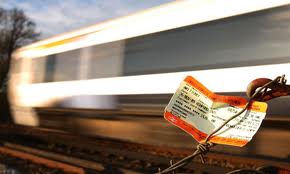
A Ticket to Ride

The imagination is one of mankind's most valuable assets. I take great delight in exercising mine, and truly enjoy playing games with myself. Today, I find myself playing The Great Philosopher and the Train of Time. My obsession with time and the speed of its passing is well known by anyone who has followed these blogs. The concept of time is a human construct, invented to keep the days and seasons apart. Pondering whether it really exists is not unlike the old conundrum of the tree falling in the forest--if no one is there to hear it fall, does it make any noise? A falling tree sends out sound waves, unquestionably, but for there to be noise requires ears to translate the sound waves into noise. Does time require someone's awareness of it in order to exist?

Seconds, minutes, hours, days, weeks, months, years, decades, centuries, millennia: what do they matter if there is no one to be aware of them? What did they matter before we became aware of them?

Without question, time ceases for the individual with death. (Oh, and by the way, time passes away--people don't pass away, they die. People have a most annoying habit of using euphemisms for things they prefer not to face directly.) Time and trains have a lot in common--they are both immensely powerful and you can't stop either one by standing in front of it and waving your arms. The train of time is speeding down an endless track and we, as a species, hitched our little circus car to it a long way into its journey. The vast majority of individual members of our species get on and off with very little notice. We're each born with a ticket to ride without having any idea of how long or how far that ticket will take us. We are also born with no concept of time itself. We gradually become aware of it as we move from being an infant to being a toddler to being a child, and from the moment we first become aware of it, it increasingly influences and in many cases controls our lives.

I'm glad Mr. Einstein pointed out that time is relative, but I think almost anyone pretty much figures that out for themselves. The relativity of time is patently obvious to anyone who has sat for an hour in a waiting room with nothing to do but stare at the walls or, conversely, spent a sunny day with friends at an amusement park. In the former instance, time slows to a crawl. In the latter, it flashes by. For one so reluctant to see time pass, I've always found the fact of time's relativity to be an ultimate irony. Life is far too short under any conditions, and then the more we enjoy it, the faster it goes by. The ancient Babylonians believed that when one died, he/she sat on a chair in a long hallway without moving for eternity. Just sitting still with nothing to do for five minutes would be an eternity for me. But its relative speed is an illusion--time itself neither slows down or speeds up outside our own minds and some obscure laws of physics.

We only gradually begin first to suspect and then to realize that our ride is not free. For most of us, the conductor doesn't even come by to start collecting tickets until we're well into our journey. We recognize him only when he stops before us and hands us a very large mirror. We still may not know at what point we have to leave the train, but the conductor's mirror gives us an indication.

That we humans are able to accept so much without questioning or even thinking about it is, another of nature's wonders. Just as we would never, quite literally, be able to walk and chew gum at the same time if we had to consider each and every movement that goes into putting one foot in front of the other, or in moving the jaws up and down, spending too much time contemplating...well, time...the past, the present, and the future...would prevent us from going about the business of living from day to day. The mind can too easily boggle if it tries to contemplate too much too quickly in too much depth.

All we can do is to accept the fact that we are aboard the train now, with absolutely no guarantee of how much longer we might have, and that the best we can to be comfortable with what we have and what we may hope to obtain. And if, during our journey, we have acquired a degree of wisdom, we also must be aware of our fellow passengers, and realize that we have an obligation to remember not only them but those who rode the train before us, and those who will be getting on at the next station.

Dorien's blogs are posted by 10 a.m. Central time every Monday and Thursday. Please take a moment to visit his website (http://www.doriengrey.com) and, if you enjoy these blogs, you might want to check out Short Circuits: a Life in Blogs (http://bit.ly/m8CSO1), which is also available as an audiobook (http://www.audible.com/pd/ref=sr_1_1?asin=B00DJAJYCS&qid=1372629062&sr=1-1).


Thursday, September 12, 2013

Expletives

At the end of 1939’s classic film, Gone With the Wind, Vivian Leigh, as Scarlet O’Hara, asks Clark Gable’s Rhett Butler what she is to do without him, and he replies, “Frankly, my dear, I don’t give a damn!” It was the first time the word “damn” had been allowed on film and shocked audiences everywhere.

Today we live in a world of expletives. They are the staple of reality TV and, to our vast discredit, we have been totally inured to them. “Fuck you, bitch” is the new “I don’t agree.”

Expletives are symptomatic of far more than the relaxing of our linguistic morals; they represent something far more serious and far more dangerous to our society. At their base, expletives are a response to our sense of loss of control over our lives. They are a lashing-out response to our sense of helplessness, a gut-level expression of frustration, anger, and contempt. The more deeply these feelings are felt, the more frequently they are expressed.

While I don’t know if any scientific research has been done on the subject, I would think it is axiomatic that one’s use of expletives is often in direct proportion to the limits of one’s education and financial security.

I watch a reality show called Hardcore Pawn and never cease being frankly and totally disheartened by the number of expletives used and the volume with which they are delivered. There is no civility, only an escalating anger and hostility. For the people featured on this show, expletives are cardboard swords wielded by those who have no other means of defense against perceived injustice; a desperate and pathetic attempt to raise themselves up by putting others down. While there is no excuse for such egregious behavior, they at least reflecting their socioeconomic limitations. There are unfortunately countless other shows that lack even this poor justification. The wildly if incomprehensibly popular shows like The Real Housewives of Toilet Gulch deliberately seek out wealthy, spoiled, contemptible bimbos to see who can be the most obnoxious in glorifying vulgarity, rudeness, incivility, and bad behavior. The most common form of address on non-scripted shows today seems to be “Bitch!” 

It could be argued--and certainly would be by me--that the producers of such shows are, in exploiting bad behavior for ratings and lucrative sponsorships, even more contemptible than the people who appear on camera.

Expletives serve a useful purpose for those who are too lazy to take the time to look for more appropriate words, and by those who think that expletives somehow give the impression of authority or being whatever the current term for “cool” may be. They are frequently used as adjectives and adverbs by those who don’t or can’t take two seconds to find something more appropriate.

The English language contains from a quarter million to a half million words; that people take the path of least resistance by using expletives as the glue to hold sentences together rather than bother themselves to use more traditional words is, to me, a total and sad mystery, as is why expletives have lost the ability to shock. Right, bitch?


Dorien's blogs are posted by 10 a.m. Central time every Monday and Thursday. Please take a moment to visit his website (http://www.doriengrey.com) and, if you enjoy these blogs, you might want to check out Short Circuits: a Life in Blogs (http://bit.ly/m8CSO1), which is also available as an audiobook (http://www.audible.com/pd/ref=sr_1_1?asin=B00DJAJYCS&qid=1372629062&sr=1-1).

Monday, September 09, 2013

Words Written, Words Heard

I’m constantly fascinated by small things of which, though they have always existed, I suddenly become aware for the first time. 

I’ve only fairly recently begun having all my books done as audiobooks, and in the process thereof realized for the first time the really significant differences between reading a book and listening to it being read aloud. The obvious--the fact that while visually reading, the mind establishes its own unheard “voice,”--aside, I am aware of differences I’d never be aware of when reading on my own: pace, rhythm, pauses, emphases, pronunciation. With my own work, I realize this is largely because I wrote the words the narrator is speaking, and must make the adjustment in my head to accept the fact that we are two separate people. 

For the most part, these problems don’t exist when listening to words someone else has written, unless I’ve read and am familiar with what’s being narrated...but I am still conscious of them.

There are also inherent subtle but basic differences between the structures and language of fiction, poetry, plays, technical works, and newspaper articles. The often unwritten rules/guidelines for directing each type of writing toward specific audiences vary widely. The language, specific words, sentence length, etc. used in writing children's books, for example, is greatly different than writing fiction for adults. Journalistic and technical writing are structured vastly different than fiction and are totally fact-based. Fiction can treat facts much more casually, though except in the case of fantasy, a certain degree of logic is generally expected. Of all forms of writing, poetry stands out as the most subjective and perhaps the most dependent on the reader’s/listener’s psychological kinship with the poet’s intent.

In fiction, generally the least constrained of all writing forms, almost anything goes, with no limit or restriction on subject matter or style. The exception to this is children’s books, which must fit within certain limitations of words which can be used and subjects which can be easily understood by young readers. If fiction is flexible, journalistic and technical writing, being almost totally fact-based, are rigid. Fiction depends largely upon its flow and structure and the words chosen and how they are used. Poetry could be considered the distillation of fiction, in that no other form depends so heavily upon the choice of exactly the right word. The distillation of thoughts/mental images into very few words is a challenge many writers...even very good writers...find difficult or impossible to meet. Fiction paints mental pictures using broad brushstrokes on large canvases, poetry strives for exquisite miniatures.

And if you’ll allow me another metaphor, if the various forms of writing  were thought of as  roads on a map, fiction would be the majority of roads--winding all over the landscape, getting to from point A to point B with a deceptive casualness. Journalistic and technical writing would be like superhighways going as directly as possible from one point to another.

But the point of this blog is to demonstrate how amazingly complex, overlapping, and interrelated human forms of communication are. We never think of it. But, every now and again, perhaps we should.

Dorien's blogs are posted by 10 a.m. Central time every Monday and Thursday. Please take a moment to visit his website (http://www.doriengrey.com) and, if you enjoy these blogs, you might want to check out Short Circuits: a Life in Blogs (http://bit.ly/m8CSO1), which is also available as an audiobook (http://www.audible.com/pd/ref=sr_1_1?asin=B00DJAJYCS&qid=1372629062&sr=1-1).


Thursday, September 05, 2013

Damned if You Do


That we humans are able to exist at all in so infinitely-complex and frustrating a world is a testament to our resilience and flexibility. We are bombarded every moment of every day with contradictions and challenges and decisions, and somehow we manage to wend our way through the minefields, though it can be argued it is harder and harder to do so.

Ironies and contradictions abound. We have created technology to make our lives simpler, and have ended up being ruled by them. We come up with new ways of direct communications and lose the ability to communicate directly (as anyone who has ever tried to reach a real human being at a major corporation can attest).

To have a computer is not enough. One must have an iPod and an iPad and a Kindle and a Blackberry. Telephones begat cell phones, and cell phones begat texting and ring tones and 14,999 various "apps". I have a computer (and have made the quantum leap from sit-in-one-place PC to a laptop, and I now have a device which enables me to get onto the internet from anywhere in the city of Chicago. I do not have an iPad or a Kindle, or a Blackberry. I have seen them, but I have never used them, and honestly I don't see any need for them, though I'm sure they're lots of fun.

I am bedeviled by endless TV commercials that encourage me to sign up for a mind-boggling array of supposedly absolutely necessary services I in fact do not need, each of which I can have "for only $99.99 for the first three months." I am well aware that the single purpose of all commercial ventures is to make money, but I rather strongly resent the implication that if I don't have (read "buy") all these gadgets and gee-gaws, I am a pathetic relic unfit for society. Lord knows I get that message clearly enough in other areas of my life. I don't need it from technology.

I have yet to completely figure out Facebook and Twitter and Google+ and LinkedIn and BranchOut and the 9,000 other internet sites I am told I "must" belong to if I intend to get/keep my name out there and find new readers for my books. And as a result, I spend so much time bouncing from site to site that I have almost no time to write.

Obligations are part of life. If you are below retirement age, you have to get up and go to work five days a week whether you want to or not. We all have obligations, to friends, family, employers. For the most part, we meet them, and when we don't, there are often consequences. It is the obligations imposed on us by our culture and by technology which are the problem. We are in effect bullied into them.

The human need to belong, to feel part of the whole, is universal. It is a fact advertisers know well and exploit to the fullest. One of the most popular expressions in the advertiser's lexicon is "Everybody's talking about..." The fact that, of course, everybody is not talking about it is totally irrelevant. The clear message they are sending is that if you are not talking about it, you don't belong.

Bombastic politicians are fond of saying "The American people will not tolerate such-and-so." So, obviously, if you have no objection to or may even be in favor of the "such-and-so," you are not a part of "the American people."

The world, it seems, is the embodiment of that old vaudeville question: "Have you stopped beating your wife?" No matter how you respond, you're in trouble. Damned if you do, damned if you don't.


Dorien's blogs are posted by 10 a.m. Central time every Monday and Thursday. Please take a moment to visit his website (http://www.doriengrey.com) and, if you enjoy these blogs, you might want to check out Short Circuits: a Life in Blogs (http://bit.ly/m8CSO1), which is also available as an audiobook (http://www.audible.com/pd/ref=sr_1_1?asin=B00DJAJYCS&qid=1372629062&sr=1-1).

Monday, September 02, 2013

The Kindness of Strangers

I've always loved Blanche DuBois' final line in “A Streetcar Named Desire,” when she takes the arm of the doctor who has come to escort her to a mental hospital: “I've always depended on the kindness of strangers.” Tell me, Blanche!

I have always depended on the kindness of friends, family, and my readers—among whom I of course include you—to assist me when I need it. Far too often, I suspect I take advantage of this kindness when it comes to doing things which I'm sure I could eventually figure out how to do myself if I could avoid an attack of apoplexy in the process. I truly do not know where I would be without my best friend Gary, who is constantly lowering a ladder into some gigantic hole I've managed to dig myself into.

I'm pretty sure my assumption that I can depend on others stems, yet again, from the fact that my emotional growth ground to a halt somewhere in early childhood. Of course I can depend on others; don't all children depend upon adults for just about everything? That's what they're there for. Am I not the center of the universe? Is there really anything in other people's lives they cannot immediately put aside when I want something from them?

But there are some things I really cannot do myself, and with which I truly need the assistance of others. This is no more true than in the area of my writing. I have no trouble writing the books, and despite all the drum-beating and flag-waving and jumping-up-and-down I do to call attention to them, there is no possible way I can reach 1/10,000th of the people I would so badly like to reach. Therefore, I depend upon those who have read and hopefully enjoyed my books to spread the word to others. Again, the assumption that I can depend on people is, for me, simply axiomatic.

I've never been sure if this assumption is based more on egoism or egotism...and there is a difference. An egoist is given to introspection, but can be modest about it. An egotist has an exaggerated sense of the importance of his self-analysis and has to tell everyone about it. (I'd like to think of myself as an egoist but considering my apparent need to tell everyone every time I find out something about myself, I can't be sure.)

While I am very fond of royalty checks, I'm more concerned about people reading and liking my books than I am about money. Very few writers ever get rich. But now that I'm having audiobooks made of all my books, this sense of need for assistance in letting more people know about them is compounded, since all my audiobook royalties are split50/50 with the narrators—I could not afford to pay them otherwise. The narrators work very hard, and if I can't get word out to prospective listeners, it's the narrators who suffer far more than I, so I do feel a strong sense of responsibility to them. So I automatically—and however irrationally—depend upon my readers and potential readers for indirect financial aid for my narrators.

Reviewing this entire topic, I realize once again that I am one huge ball of contradictions. Yes, I depend on the kindness of others for probably far more things than I should, and fully take it as my due when it is offered...with things I feel I need assistance, that is. Yet I bristle and feel humiliated when a kind stranger on a bus offers me a seat, or opens a door for me, or tries to help me in some way for which I do not want or need help. I can't expect to have it both ways, but of course I do.

Yesterday as I was leaving the physical therapy office, I tried to open the door the wrong way and, as is my wont, when it didn't work the first or second or third time, I grew angry. Finally, a young woman got up and came over saying “let me get that for you.” It was very kind of her, but I was absolutely humiliated and a boiling cauldron of self loathing. I can't even open a f**king door, for chrissake? What the hell is wrong with me?

I suspect I may not be totally alone in trying to find a balance between needing and appreciating help—and help must always be appreciated—and expecting it as our due. I'm still trying to find that balance.

Dorien's blogs are posted by 10 a.m. Central time every Monday and Thursday. Please take a moment to visit his website (http://www.doriengrey.com) and, if you enjoy these blogs, you might want to check out Short Circuits: a Life in Blogs (http://bit.ly/m8CSO1), which is also available as an audiobook (http://www.audible.com/pd/ref=sr_1_1?asin=B00DJAJYCS&qid=1372629062&sr=1-1).